

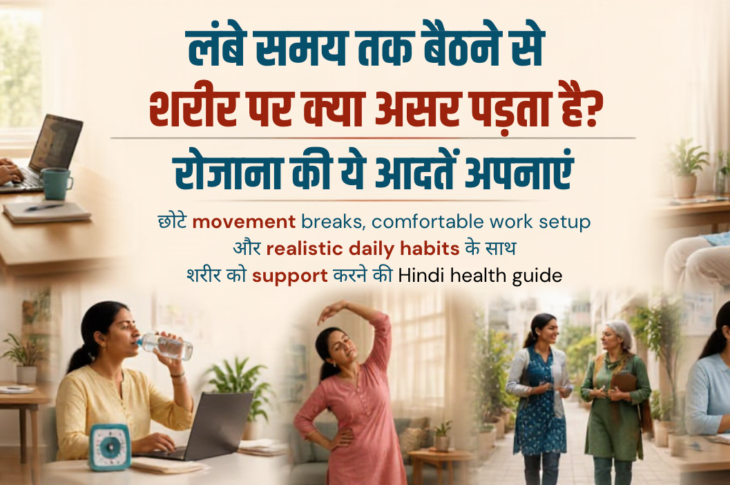
सुबह एक महिला laptop खोलकर काम शुरू करती है। फिर meetings, commute, online classes, caregiving, meals और phone use के बीच कई घंटे लगभग उसी position में बीत जाते हैं। शाम तक गर्दन और कंधों में जकड़न, lower back discomfort, पैरों में भारीपन, आंखों में थकान या energy कम महसूस हो सकती है।तब उसे लगता है कि अब एक घंटे का intense workout ही समाधान है। लेकिन पूरे दिन की sitting को balance करने की शुरुआत छोटे movement breaks, position बदलने, accessible activity और realistic routines से भी हो सकती है। आपको हर समय rigid posture में बैठने या शरीर को punish करने की जरूरत नहीं है।
|
मुख्य बात — लंबे समय तक बैठना अपने–आप किसी बीमारी या health outcome का निश्चित कारण नहीं बताता। कुल sitting time, बिना interruption के बैठना, movement level, sleep, work setup, pain, existing health conditions और individual context को साथ देखकर समझना जरूरी है। |
लंबे समय तक बैठना क्या कहलाता है और context क्यों मायने रखता है?
लंबे समय तक बैठना तब कहा जा सकता है जब काम, पढ़ाई, यात्रा, screen use, caregiving या आराम के दौरान शरीर लंबे समय तक कम movement वाली स्थिति में रहता है। इसका कोई एक universal interval या हर व्यक्ति पर लागू होने वाली सीमा नहीं है। किसी के लिए office chair पर बैठना मुख्य चुनौती हो सकता है, तो किसी के लिए commute, pain, fatigue या limited access options।Sitting को laziness, willpower या character की कमी से जोड़ना सही नहीं है। Job requirements, घर की जिम्मेदारियां, transport, pregnancy, disability, chronic illness, उम्र, sleep और financial limitations सभी routine को प्रभावित कर सकते हैं। इसलिए लक्ष्य guilt नहीं, बल्कि शरीर और दिनचर्या के बीच थोड़ा बेहतर fit बनाना है।शरीर पर संभावित असर: discomfort से daily functioning तक
एक ही position में रहने से neck, shoulders, back, hips और legs में stiffness, discomfort या fatigue महसूस हो सकती है। फिर भी हर दर्द का कारण sitting नहीं होता। Injury, stress, sleep, work setup, medical condition और कई अन्य कारण भी भूमिका निभा सकते हैं।लंबे screen time में आंखों में dryness, strain, headache या focus fatigue हो सकती है। Blink करना, थोड़ी देर दूर देखना, glare और brightness adjust करना मददगार हो सकता है, लेकिन vision symptoms बने रहें तो eye-care professional से मिलें।कम movement के साथ कुछ लोगों को energy, mood, sleep routine या daily functioning में बदलाव महसूस हो सकता है। इसे केवल inactivity या willpower problem न समझें। Sleep, nutrition, stress, social support और health conditions को भी ध्यान में रखें।लंबे समय तक inactive रहना और physical activity की कमी कुछ health risks से जुड़ सकते हैं, लेकिन किसी एक व्यक्ति का diagnosis केवल उसके बैठने के समय के आधार पर नहीं किया जा सकता। Circulation को लेकर डर फैलाने के बजाय red flags पहचानें: एक पैर में अचानक swelling, pain, redness या warmth, chest pain अथवा breathing difficulty में urgent assessment जरूरी है।क्या सिर्फ posture ही समस्या है?
Perfect posture नाम की कोई एक universal position नहीं होती। लंबे समय तक एक ही “सही” posture में बैठे रहना भी थकाऊ हो सकता है। ज्यादा उपयोगी लक्ष्य है position variability—कभी बैठना, कभी supported standing, कभी थोड़ा recline करना, gentle movement करना और task के अनुसार support बदलना।Ergonomics को सरल भाषा में समझें
Ergonomics का अर्थ शरीर और काम के बीच बेहतर fit बनाना है, न कि पूरे दिन rigid posture रखना। Screen, chair, desk, lighting, noise, keyboard, mouse, foot support और frequently used items को अपनी height, vision, काम और access needs के अनुसार adjust करें।Screen को आंखों के लिए comfortable height और दूरी पर रखें। Keyboard और mouse तक कंधे उठाए बिना पहुंच हो, और पैर floor या footrest पर supported रहें। Perfect desk जरूरी नहीं है—books से screen ऊंची करना, cushion से support देना या low-cost footrest लगाना भी छोटे उपयोगी बदलाव हो सकते हैं।हर 20 मिनट का fixed rule या perfect 90-degree posture हर व्यक्ति के लिए prescription नहीं है। Comfort, variation और task changes पर ध्यान दें। Laptop users के लिए external keyboard और mouse, raised screen, cushion या practical sit-stand arrangement विकल्प हो सकते हैं।Exercise और movement में फर्क
Movement पूरे दिन के छोटे actions और position changes हैं; exercise planned activity हो सकती है। दोनों useful हो सकते हैं। Wheelchair, mobility aid, chronic pain, fatigue या disability के साथ रहने वाले व्यक्ति के लिए movement का अर्थ seated exercises, range-of-motion, breathing, upper-body movement, pressure relief, supported standing या rest भी हो सकता है।Weight loss को goal मानना आवश्यक नहीं। Strength, comfort, circulation, confidence, sleep, mood, function और participation भी meaningful goals हैं। किसी भी exercise को बीमारी का cure या हर व्यक्ति के लिए automatically safe न मानें।
रोजाना की 8 realistic movement habits
- इन आदतों को एक साथ शुरू करना जरूरी नहीं। अपनी capacity, pain level, access और schedule के अनुसार एक–दो विकल्प चुनें। Position-change cue — समय–समय पर posture या activity बदलें: stand, walk, stretch, recline या supported position, जो accessible हो। Timer, meeting transition, पानी भरना या phone reminder cue बन सकता है। कोई rigid universal interval जरूरी नहीं।
- Micro-movement — ankle pumps, shoulder rolls, gentle neck movement, seated marches, hand stretches या छोटे walks आजमाएं। इन्हें pain-free range और अपनी tolerance में रखें। Movement से pain बढ़े तो रुकें और तरीका बदलें।
- Workstation review — screen, keyboard, mouse, chair support और foot support को review करें। Books, cushion या low-cost footrest से छोटे बदलाव संभव हैं। एक बार में पूरा setup बदलना जरूरी नहीं।
- Meeting movement — जहां appropriate हो, audio call में खड़े हों, short walking meeting करें या stretch transition रखें। Accessibility, privacy और workplace culture का सम्मान करें; movement को किसी पर अनिवार्य न बनाएं।
- Commute और household transitions — safe और accessible होने पर bus stop तक थोड़ी walk, घर के छोटे tasks, laundry, gardening या पानी भरने जैसे routine movements को activity मानें। इन्हें mandatory test न बनाएं।
- Screen और eye breaks — दूर की वस्तु देखें, blink करें और glare या brightness adjust करें। Vision discomfort बना रहे तो eye-care professional से सलाह लें।
- Active leisure — dancing, walking, yoga, swimming, cycling, strength work, chair exercise, adaptive sports या कोई enjoyable activity चुनें। शुरुआत क्षमता और clinician guidance के अनुसार करें; intensity ही success का एकमात्र measure नहीं।
- Recovery और sleep — movement के साथ rest, hydration, meals, sleep opportunity और pain management भी plan का हिस्सा रखें। शरीर को punish करने के लिए exercise न करें।
अलग काम और access needs के लिए practical ideas
- Work from home: phone calls के बीच room change करें, kitchen counter पर छोटा task करें, laptop position बदलें, पानी पास रखें और calendar में transition cues जोड़ें।
- Office: safe हो तो printer, water station या colleague conversation के लिए छोटी walk लें। Meeting transitions में position बदलें और adjustable chair या foot support मांगने पर विचार करें।
- Students: study blocks के बीच position variation रखें। Notes पढ़ते समय screen height, backpack weight और chair support review करें।
- Commute: लंबे सफर में safe breaks, ankle movement, supported posture और arrival के बाद gentle transition रखें। ड्राइविंग या चलती गाड़ी में unsafe movement न करें।
- Caregivers: caregiving को exercise का substitute न मानें। Safe lifting technique, equipment और help-sharing पर विचार करें; जरूरत हो तो support मांगें।
- Shift workers: clock-based routine की जगह sleep-wake cycle और energy anchors के अनुसार movement plan बनाएं।
- Pregnancy, postpartum और chronic illness: comfort, fatigue, symptoms और clinician guidance को प्राथमिकता दें। Disability, arthritis, osteoporosis, recent surgery या prescribed restrictions में personalised advice लें।
|
याद रखें: movement का मतलब केवल खड़ा होना या चलना नहीं। Seated movement, supported position, gentle range-of-motion और rest भी आपके शरीर की जरूरत के अनुसार valid options हो सकते हैं। |
Common mistakes और बेहतर alternatives
- केवल weekend workout पर निर्भर रहना: दिनभर में छोटे movement breaks और position changes जोड़ें।
- दर्द को ignore करके exercise करना: pain बढ़े तो pause, modify और जरूरत पर professional advice लें।
- Perfect posture बनाए रखना: एक position को ideal मानने के बजाय support और variation अपनाएं।
- महंगे standing desk को अनिवार्य मानना: books, cushion, foot support और task transitions जैसे low-cost बदलाव आजमाएं।
- हर व्यक्ति को एक ही stretch देना: mobility, pain, disability और access needs के अनुसार adapt करें।
- Sitting को weight या character से जोड़ना: health को function, comfort और context के साथ देखें।
- Exercise को punishment बनाना: enjoyable और sustainable movement चुनें।
- Severe symptoms को inactivity मान लेना: red flags में medical care लें।
Do और Don’t guidance
- Don’t: लंबे समय तक बैठने को laziness या personal failure कहें। Do: work design, access और realistic movement देखें।
- Don’t: एक perfect posture या universal timer को mandatory बनाएं। Do: position variation और comfort पर ध्यान दें।
- Don’t: दर्द के बावजूद push करें। Do: activity modify करें और जरूरत पर assessment लें।
- Don’t: expensive equipment को only solution मानें। Do: books, cushion, foot support और routine cues देखें।
- Don’t: weight loss को movement का एकमात्र goal बनाएं। Do: strength, comfort, function और wellbeing को महत्व दें।
- Don’t: sudden severe symptoms को सिर्फ sitting का असर मानें। Do: urgent signs में medical help लें।
Troubleshooting: routine अटक जाए तो क्या करें?
- Timer irritate करे: meeting खत्म होना, पानी भरना, meal break या task change जैसे natural cues चुनें।
- Standing से pain बढ़े: seated movement, supported position, gentle range-of-motion या clinician-guided adaptation चुनें।
- Workstation बदलना संभव न हो: एक बार में एक छोटा change करें—screen height, foot support, lighting या external keyboard।
- Exercise से fatigue बढ़े: duration या intensity कम करें और recovery देखें। Fatigue persistent या unusual हो तो clinician से सलाह लें।
- गर्दन या पीठ का pain लौटता रहे: केवल stretching दोहराने के बजाय work setup, sleep, stress, injury और medical context review करें।
- अचानक swelling या सांस की परेशानी: एक पैर में अचानक swelling या pain, chest pain, breathing difficulty, fainting, new weakness या numbness, अथवा bladder/bowel control खोने पर urgent medical help लें।
कब self-care पर्याप्त नहीं और professional advice कब लें?
Persistent या worsening neck, back, hip, knee या shoulder pain, numbness, tingling, weakness, balance changes, persistent swelling, unexplained fatigue, repeated headaches या vision changes को ignore न करें। Pain अगर sleep या daily functioning को disrupt करे, तो doctor, physiotherapist या relevant qualified healthcare professional से personalised guidance लें।Injury, recent surgery, pregnancy या postpartum अवस्था, arthritis, osteoporosis, chronic illness, disability, neurological symptoms या prescribed restrictions में clinician guidance जरूरी हो सकती है। Sudden severe pain, chest pain, severe breathing difficulty, fainting, one-sided weakness, confusion, loss of bladder/bowel control या अन्य emergency signs में local emergency services से संपर्क करें।यह लेख diagnosis, physiotherapy plan या personalised medical advice का substitute नहीं है।
7-day movement reset: gentle consistency experiment
- इसे weight-loss challenge नहीं, बल्कि gentle consistency experiment समझें। कोई दिन छूट जाए तो guilt के बिना अगले छोटे कदम से आगे बढ़ें। Day 1: देखें कि सबसे ज्यादा sitting कब और किस task में होती है। एक natural movement cue चुनें।
- Day 2: screen, chair, lighting और foot support में एक छोटा ergonomic बदलाव करें।
- Day 3: दिन में दो बार pain-free micro-movement या position change जोड़ें।
- Day 4: एक meeting, study block या commute transition को movement cue बनाएं।
- Day 5: walk, dance, seated movement, stretching, cycling या adaptive option में कोई enjoyable accessible activity चुनें।
- Day 6: sleep, meals, hydration और recovery review करें। Persistent symptoms हों तो appointment plan करें।
- Day 7: देखें कि कौन–सी दो habits आपकी work, body, access needs और schedule में sustainable हैं।
आज से शुरू करने के 5 छोटे कदम
- अपनी सबसे लंबी sitting period पहचानें और उसमें एक natural position-change cue जोड़ें।
- Screen या chair setup में एक low-cost adjustment करें।
- एक pain-free micro-movement चुनें जिसे आप दिन में दो बार कर सकें।
- किसी enjoyable और accessible activity को calendar में रखें, बिना उसे punishment बनाए।
- Persistent pain, numbness, weakness, swelling या functioning पर असर के लिए professional advice का अगला कदम तय करें।
Mini checklist
- मैं एक ही position में कितनी देर रहती हूं और क्या position बदलने का cue है?
- क्या screen, chair, lighting और foot support मेरे शरीर और काम के अनुकूल हैं?
- क्या कोई movement pain, numbness या weakness बढ़ाता है?
- क्या मैं movement के साथ sleep, meals, hydration और recovery भी protect कर रही हूं?
- क्या मेरी activity accessible, enjoyable और sustainable है?
- क्या मैं sitting को weight या character से जोड़ने के बजाय context समझ रही हूं?
- क्या कोई persistent, worsening या unexplained symptom है?
- क्या pregnancy, postpartum, disability, chronic illness, injury या surgery के कारण guidance चाहिए?
- क्या अचानक severe pain, chest pain, breathing difficulty, fainting या new weakness जैसे red flags हैं?
- इस सप्ताह कौन–सी दो छोटी habits मैं बिना guilt जारी रख सकती हूं?
