







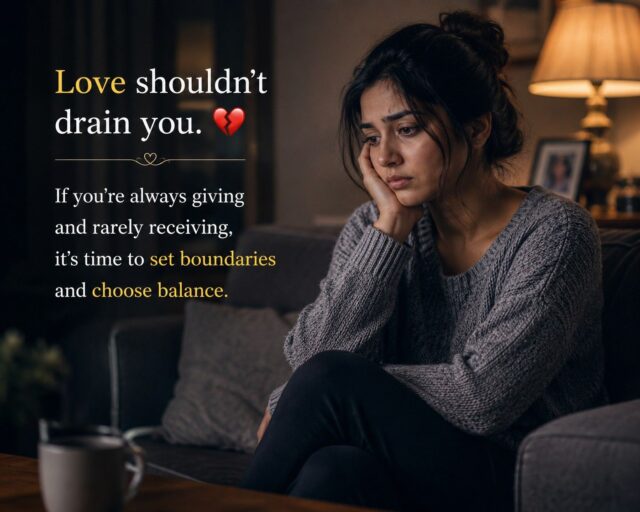
Every relationship requires effort, care, and compromise. But when giving becomes one-sided, it can lead to emotional exhaustion and resentment. Many people—especially women—mistake over-giving for love, unaware that it slowly erodes their sense of self.
1. You Always Put Their Needs Before Yours
If your partner’s happiness constantly comes before your own, it’s a red flag. Healthy love involves mutual care, not self-neglect.
2. You Feel Drained Instead of Fulfilled
Love should energize, not deplete. When every interaction leaves you tired or anxious, it’s a sign you’re giving more than you receive.
3. You Apologize Even When You’re Not Wrong
Constantly taking the blame to keep peace means you’re prioritizing harmony over honesty. True connection thrives on equality, not guilt.
4. You Fear Losing Them If You Set Boundaries
If saying “no” feels risky, it’s time to reassess. Boundaries don’t push love away—they protect it.
5. You’re the Only One Making Effort
When you’re always initiating conversations, planning dates, or solving problems, the relationship becomes one-sided. Love should be a partnership, not a performance.
6. You’ve Lost Touch with Your Own Identity
If you’ve stopped pursuing hobbies, friendships, or goals because of your partner, you may be giving too much of yourself away.
7. You Confuse Sacrifice with Love
Sacrifice is noble when mutual. But when it becomes habitual and unreciprocated, it turns into emotional self-abandonment.
How to Restore Balance
- Reclaim your time: Reconnect with activities that bring joy.
- Communicate openly: Express needs without guilt.
- Set healthy boundaries: Saying “no” is an act of self-respect.
- Seek support: Talk to a therapist or trusted friend.
Love should never cost self-worth. Recognizing when you’re giving too much is the first step toward creating relationships built on respect, equality, and emotional balance.