

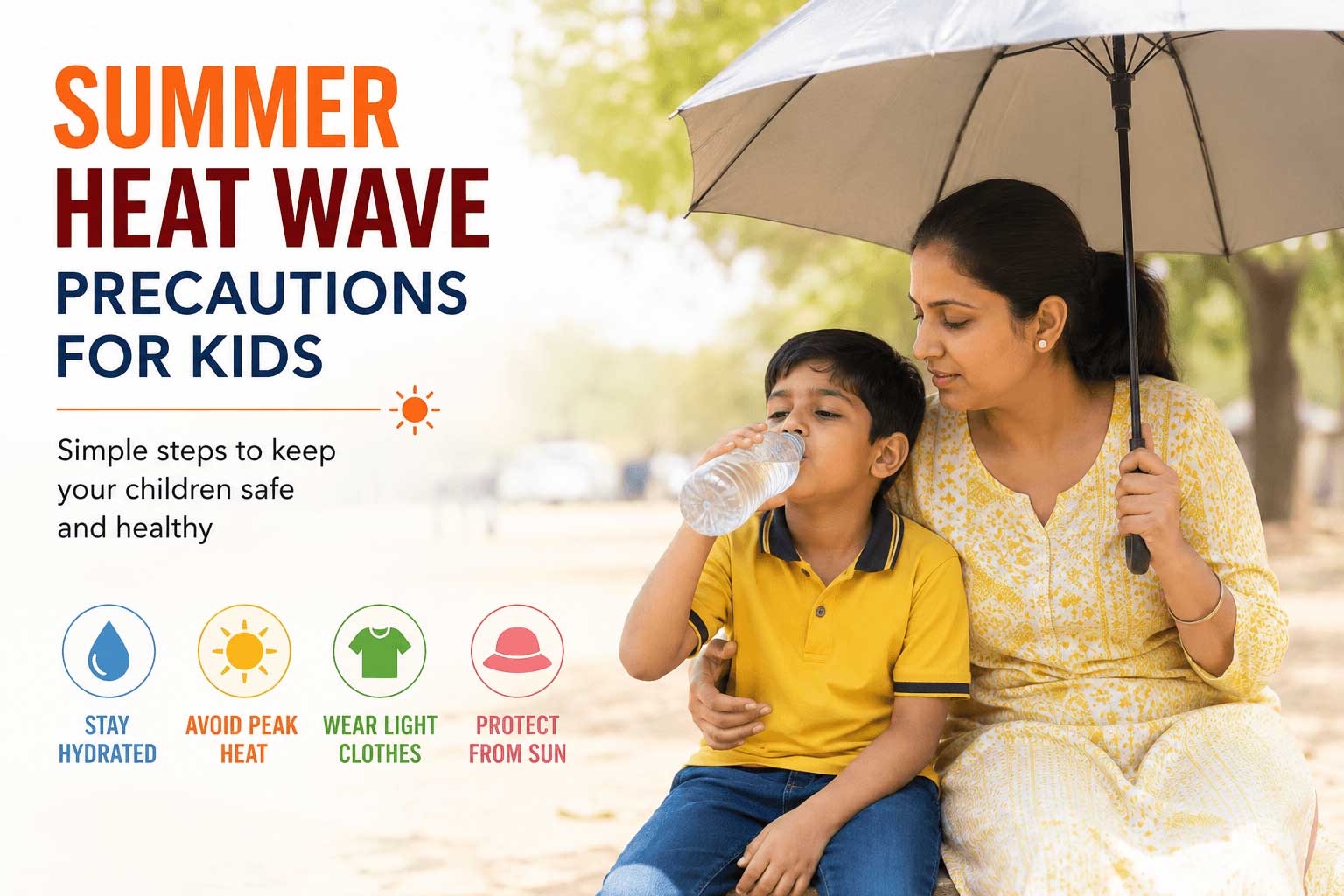
Summer vacation often means one thing for kids—more playtime, more ice creams, more outdoor fun, and endless energy.
But for parents, summer also brings a real worry.
Because when temperatures rise sharply, children are among the first to feel the impact.
In many Indian cities, summer heat waves are becoming harsher every year. And while adults may manage the discomfort, children can get dehydrated, exhausted, or even suffer heatstroke much faster.
The reason? Their bodies don’t cool down as efficiently as adults.
So if you’re a parent wondering how to keep your child safe this summer, here’s your practical guide.
1. Keep Hydration a Priority
Children get so busy playing that they often forget to drink water.
And that’s where the problem starts.
By the time your child says “I’m thirsty,” dehydration may have already begun.
Offer fluids regularly:
- Plain water
- Coconut water
- Lemon water
- Homemade buttermilk
- ORS if needed
Avoid:
- Sugary sodas
- Energy drinks
- Too many packaged juices
Parent tip: Make hydration fun with colorful bottles or fruit-infused water.
2. Avoid Going Out During Peak Heat Hours
The sun is usually strongest between:
11 AM to 4 PM
This is when the risk of:
- Heat exhaustion
- Sunburn
- Dehydration
- Heatstroke
becomes much higher.
If outdoor activity is unavoidable:
- Keep trips short
- Carry cold water
- Use umbrellas
- Make kids wear caps
3. Dress Kids in Breathable Clothing
Clothing matters more than many parents realise.
Best choices:
- Loose cotton clothes
- Light shades like white or pastel colors
- Comfortable sandals
Avoid:
- Tight outfits
- Synthetic fabrics
- Dark heavy clothing
The goal is simple—help the body stay cool naturally.
4. Never Leave a Child Inside a Parked Car
Not even for “just five minutes.”
A parked vehicle heats up shockingly fast.
Even with slightly open windows, temperatures inside can become life-threatening.
This can lead to:
- Heatstroke
- Breathing difficulty
- Fainting
- Severe emergency situations
5. Feed Cooling Summer Foods
Food also plays a major role in managing body temperature.
Great summer foods for kids:
- Watermelon
- Muskmelon
- Cucumber
- Yogurt
- Fresh curd
- Coconut water
- Homemade fruit bowls
- Light khichdi
- Curd rice
Avoid too much:
- Fried food
- Spicy junk food
- Heavy oily meals
6. Know the Signs of Heat Exhaustion
Sometimes kids don’t clearly explain how they feel.
Watch for:
- Tiredness
- Irritability
- Headache
- Dizziness
- Nausea
- Dry lips
- Less urination
- Fast heartbeat
If you notice these signs, move your child to a cooler place immediately.
7. Learn Heatstroke Warning Signs
Heatstroke is a medical emergency.
Warning signs:
- Very high body temperature
- Hot dry skin
- Confusion
- Trouble breathing
- Vomiting
- Fainting
- Seizures
Get urgent medical help immediately.
8. Protect Their Skin from Harsh Sun
Children’s skin is sensitive.
Before stepping out:
- Apply child-safe sunscreen
- Use caps or hats
- Carry umbrellas
- Use sunglasses if needed
9. Keep Indoor Spaces Cool
Not every family has AC, and that’s okay.
Simple cooling steps:
- Close curtains during afternoon
- Use fans or coolers
- Encourage indoor play
- Keep rooms ventilated
10. Extra Care for Babies
Babies are even more vulnerable than older kids.
Special precautions:
- Frequent breastfeeding
- Avoid direct sunlight
- Light cotton clothes
- Keep checking body temperature
- Watch for unusual crying or lethargy
Final Thoughts
Summer should be about laughter, mangoes, naps, and family memories.
Not hospital visits.
A little awareness today can prevent a major health scare tomorrow.
Because when it comes to children and extreme heat, prevention truly is protection.
