





Mardaani 3 Movie Review – Rani Mukerji’s Powerful Comeback

Mardaani 3 Movie Review 2026
Genre: Crime Thriller / Action / Social Drama
Director: Abhiraj Minawala
Lead Actress: Rani Mukerji as Shivani Shivaji Roy
Release: 30 January 2026

Mardaani 3 continues the journey of fearless police officer Shivani Shivaji Roy, tackling the dark reality of girl child trafficking and crime syndicates. The film stays gritty, realistic, and emotionally intense, showing how deeply rooted crime networks destroy lives.

The plot is fast-paced and serious, focusing more on realism than commercial Bollywood masala.

Rani Mukerji

  1. Rani once again delivers a strong, fearless and emotional performance.
  2. Critics and audiences agree she carries the entire film on her shoulders.
  3. Her intensity, dialogue delivery, and action scenes are highly praised.

Villain & Supporting Cast

The antagonist (Mallika Prasad) is considered disturbing and impactful, continuing the franchise tradition of strong villains.

Direction, Action & Music

Direction: Gritty and realistic, with a dark tone.
Action: Raw and grounded, not over-the-top.
Background Score: Powerful and emotional, heightening tension.

What’s Good

  1. Powerful social message
  2. Rani Mukerji’s brilliant performance
  3. Dark, realistic storytelling
  4. Strong villain character
  5. Emotional and intense scenes

Critics & Audience Reaction

  1. Critics called it necessary, impactful, but flawed.
  2. Fans praised it as emotionally strong and gripping.
  3. Some viewers felt it’s the weakest part of the franchise but still watchable.
  4. Overall ratings are around 3.5 to 4 stars out of 5
Mardaani 3 is a strong, serious crime thriller with a powerful social message, driven mainly by Rani Mukerji’s brilliant performance. It may not surpass the original Mardaani, but it is still worth watching for thriller lovers and fans of strong female-led films.  

Vaani Kapoor Turns Showstopper for Neeta Lulla’s Showcase with VivZ Fashion School

Vaani Kapoor Turns Showstopper for Neeta Lulla
Vaani Kapoor Turns Showstopper for Neeta Lulla’s Showcase with VivZ Fashion School Pune witnessed a defining fashion moment as Neeta Lulla presented her fashion showcase in the city – an evening shaped by discipline, depth, and decades of lived design experience. Held on Tuesday, 27th January 2026 at 7 PM, at The Westin Pune, the showcase took place in collaboration with VivZ Fashion School. Actor Vaani Kapoor walked as the showstopper for the presentation. This presentation marked a philosophy in motion. For Neeta Lulla, fashion has never been about excess or immediacy—it has always been about intention. Rooted in cinematic storytelling and refined through over four decades of couture practice, her work is guided by precision, emotional intelligence, and an unwavering respect for craft. Each ensemble reflects a belief that clothing must hold meaning, memory, and longevity—serving the woman who wears it rather than the moment it is seen. Having dressed some of Indian cinema’s most iconic women, Neeta Lulla brought the same narrative sensitivity to this showcase. Structure led the conversation, emotion took precedence over ornamentation, and restraint emerged as a form of power. Architectural drapes moved with quiet authority, hand-worked surfaces revealed patience and mastery, and silhouettes—anchored by strong shoulders and fluid lines—flowed without proclamation. The palette settled into jewel tones, softened metallics, and grounded neutrals—colours chosen not for trend cycles, but for timeless relevance. At the heart of the showcase lay a clear ethos: true luxury whispers. Heritage appeared not as replication, but as emotion—translated through form, texture, and balance.Each piece unfolded like character development—layered, purposeful, and designed to endure beyond seasons. Fashion here was not costume, but presence—grace, dignity, and confidence rendered for the contemporary Indian woman. Reflecting on the showcase, Neeta Lulla shared: “My work has always been guided by stories of women—of resilience, evolution, and an Indian heritage that grows without losing its soul. Evolution isn’t about doing more; it’s about refining instinct, strengthening structure, and allowing craft to carry emotion. Vaani Kapoor, with her raw yet stylized presence, her strength in stance, and the effortless way she inhabits a persona, became the perfect muse for this collection—her energy brought the designs to life in a way that felt entirely natural. Collaboration with institutions like VivZ Fashion School reminds me that curiosity is the beginning of learning. Legacy is not about remaining unchanged, but about staying honest—observing closely and listening to the voices shaping the future.” Reflecting on the collaboration, Dr. Arti Rai said: “This showcase marked a meaningful convergence of legacy and learning. Neeta Lulla’s design philosophy offered students an invaluable lens into discipline, storytelling, and purpose-driven fashion. At VivZ Fashion School, we remain committed to nurturing creative voices grounded in craft, clarity, and contemporary relevance.” With upcoming developments across nine premium landmark pin codes, Kundan Spaces is shaping a portfolio of large-scale projects planned for 2026. Partnering with celebrated designer Neeta Lulla, the brand brings together design excellence, thoughtful planning, and engineering precision to create architectural marvels that will redefine Pune’s skyline and contribute to India’s infrastructure-led growth, said Mr Ashish Jain, CMD Kundan Spaces. Complementing the understated elegance of the collection, the jewellery for the showcase was curated by Sheetal Creations, adding refined accents that echoed the philosophy of restraint and timeless luxury. As Neeta Lulla took the Pune stage, she reaffirmed a core belief that has defined her journey: maturity creates the strongest statements, restraint can be radical, and enduring fashion builds identity—not fleeting moments. By reinterpreting her archival designs through a refined, new-age lens, she continues to speak to the evolving sensibilities of the contemporary Indian woman—where heritage feels current, purposeful, and deeply personal.

Move Every Day: The Simple Habit That Transforms Health and Happiness

Daily Movement Matters
Daily Movement: The Key to Better Health, Energy, and Happiness

Modern routines often involve long hours of sitting—at desks, in cars, or on couches. Yet, the human body is built to move. Daily movement doesn’t have to mean intense workouts; it’s about staying active throughout the day to support overall well-being.

Why Daily Movement Matters

Movement keeps the body strong, flexible, and energized. It improves circulation, strengthens muscles, and supports joint health. Even light activities like walking, stretching, or household chores can make a difference. Regular movement also helps regulate metabolism and reduces the risk of chronic diseases such as heart disease, diabetes, and obesity.

The Mental and Emotional Benefits

Physical activity releases endorphins—natural chemicals that boost mood and reduce stress. Moving regularly can improve focus, enhance creativity, and promote better sleep. Taking short breaks to stretch or walk can refresh the mind and increase productivity throughout the day.

Easy Ways to Add Movement to Every Day

  • Take short walks: A 10-minute walk after meals aids digestion and circulation.
  • Stretch often: Gentle stretches relieve tension from sitting too long.
  • Use stairs instead of elevators: Small choices add up to big results.
  • Stand while working: Alternate between sitting and standing to improve posture.
  • Engage in active hobbies: Gardening, dancing, or playing with pets keeps the body moving naturally.

Building a Sustainable Routine

Consistency is more important than intensity. Start small—set reminders to move every hour or schedule a daily walk. Over time, these habits become part of a balanced lifestyle. The goal is progress, not perfection.

Daily movement is a simple yet powerful way to improve health and happiness. Every step, stretch, and moment of activity contributes to a stronger body, a clearer mind, and a more energized life.

Snail Mucin: 10 Incredible Benefits for Glowing, Healthy Skin

Benefits of Snail Mucin for Skin
AI generated images

What Is Snail Mucin?

Snail mucin, also known as snail secretion filtrate, is a natural ingredient derived from snails. It’s packed with nutrients like hyaluronic acid, glycoproteins, zinc, and peptides that help repair and rejuvenate the skin. Popularized by Korean skincare, snail mucin is now a global favorite for achieving a youthful, radiant complexion.

How to Use Snail Mucin in Skincare

Apply snail mucin essence or serum after cleansing and toning, followed by moisturizer. It can be used both morning and night for best results.

10 Benefits of Snail Mucin for Skin

1. Deep Hydration

Snail mucin is rich in hyaluronic acid, which helps retain moisture and keeps the skin plump and hydrated throughout the day.

2. Boosts Collagen Production

The peptides and glycolic acid in snail mucin stimulate collagen synthesis, improving skin elasticity and reducing fine lines.

3. Heals Acne and Scars

Its regenerative properties help repair damaged skin, fade acne scars, and calm inflammation caused by breakouts.

4. Brightens Dull Skin

Snail mucin promotes cell turnover, helping to fade dark spots and even out skin tone for a brighter complexion.

5. Reduces Fine Lines and Wrinkles

With consistent use, snail mucin minimizes the appearance of wrinkles and fine lines, giving the skin a smoother texture.

6. Soothes Irritated Skin

Its anti-inflammatory and healing properties make it ideal for calming redness, irritation, and sensitivity.

7. Improves Skin Texture

Regular use of snail mucin helps refine pores and smooth rough patches, leaving the skin soft and supple.

8. Strengthens the Skin Barrier

Snail mucin supports the skin’s natural barrier, protecting it from environmental stressors and pollutants.

9. Enhances Product Absorption

When layered under other skincare products, snail mucin helps improve absorption, maximizing the benefits of serums and moisturizers.

10. Suitable for All Skin Types

Whether dry, oily, or sensitive, snail mucin adapts to various skin needs, making it a versatile addition to any skincare routine.

Snail mucin is more than just a skincare trend—it’s a powerhouse ingredient that delivers visible results. From hydration to healing, its benefits make it a must-have for anyone seeking radiant, youthful skin.

Empowering Connections: How Social Commentary and Community Building Are Shaping Women’s Spaces

Group of women sharing laughter and conversation
AI AI generated images

In recent years, social commentary around women’s experiences has evolved into a powerful movement for change. Conversations about respect, equality, and safety are no longer confined to activism—they are shaping everyday interactions, workplaces, and public spaces. These discussions are not just about identifying problems but about building communities that foster understanding and empowerment.

Women’s Safety in Urban Design

Urban design plays a crucial role in shaping how safe and included women feel in public spaces. Well-lit streets, accessible public transport, and inclusive architecture are becoming central to city planning. Designers and policymakers are increasingly considering women’s perspectives to create environments that promote comfort, visibility, and security. This shift reflects a growing recognition that safety is not just a personal issue—it’s a societal responsibility.

Respectful Treatment and Representation

Respectful treatment of women extends beyond physical safety—it includes representation, voice, and agency. Media, workplaces, and institutions are being challenged to portray women authentically and treat them equitably. Social media has amplified these conversations, allowing women to share experiences, call out injustices, and celebrate progress collectively.

The Rise of Women’s Circles and Community Gatherings

Community gatherings like “girls’ brunches,” women’s circles, and networking events are becoming safe spaces for connection and growth. These gatherings go beyond socializing—they serve as platforms for mentorship, healing, and empowerment. Women are finding strength in shared experiences, building networks that support both personal and professional development.

Digital Communities and Online Solidarity

Online platforms have become modern-day meeting grounds for women to connect, share stories, and mobilize for change. From local Facebook groups to global movements, digital communities are fostering solidarity and amplifying women’s voices. These spaces encourage open dialogue about mental health, career challenges, and social issues, bridging gaps across geography and culture.

Building a Culture of Empathy and Inclusion

At the heart of these movements lies empathy—the ability to listen, understand, and act. Community building rooted in empathy transforms social commentary into tangible change. When women come together to discuss safety, respect, and empowerment, they create ripple effects that influence policy, culture, and everyday behavior.

Looking Ahead

The growing emphasis on women’s safety, respect, and community connection signals a cultural shift toward inclusivity and care. As conversations continue to evolve, they are shaping a world where women’s voices are heard, valued, and celebrated. Through collective dialogue and community building, society moves closer to a future defined by equality, compassion, and shared empowerment.

Sustainable Fashion Trends 2026: Redefining Style with a Green Touch

Sustainable Fashion Trends for 2026 (1)
Sustainable Fashion Trends for 2026

The Rise of Conscious Consumerism

Sustainable fashion has evolved from a niche movement into a global shift in how clothing is designed, produced, and consumed. As awareness of environmental and ethical issues grows, consumers are demanding transparency and responsibility from brands. This transformation is reshaping the fashion industry, encouraging innovation and mindful consumption.

Key Sustainable Fashion Trends

1. Circular Fashion

Circular fashion focuses on extending the life cycle of garments through recycling, upcycling, and resale. Brands are designing clothes with longevity in mind, using durable materials and modular designs that can be repaired or repurposed. Platforms for secondhand shopping and clothing rental services are also gaining popularity, reducing waste and promoting reuse.

2. Eco-Friendly Materials

The shift toward natural, organic, and recycled fabrics is central to sustainable fashion. Materials like organic cotton, hemp, bamboo, and Tencel are replacing resource-intensive textiles. Recycled polyester made from plastic bottles and ocean waste is also becoming a staple, helping reduce pollution and reliance on virgin materials.

3. Slow Fashion Movement

Slow fashion encourages mindful purchasing and appreciation for quality over quantity. It promotes timeless designs, ethical production, and fair wages for workers. Consumers are moving away from fast fashion’s rapid turnover, choosing fewer but better-made pieces that last longer and tell a story.

4. Local and Ethical Production

Supporting local artisans and small-scale producers helps reduce carbon footprints and sustain traditional craftsmanship. Ethical production ensures fair labor practices, safe working conditions, and equitable pay. Many brands now highlight their supply chains, allowing customers to trace the origins of their garments.

5. Digital Fashion and Virtual Clothing

Technology is transforming sustainability through digital fashion. Virtual clothing for social media and gaming reduces physical production waste. 3D design tools and digital sampling also minimize fabric waste during the design process, making production more efficient and eco-friendly.

6. Biodegradable and Regenerative Textiles

Innovations in textile science are introducing biodegradable fabrics that decompose naturally, reducing landfill waste. Regenerative agriculture practices used in cotton and wool farming restore soil health and biodiversity, creating a positive environmental impact.

The Role of Consumers

Sustainability in fashion depends not only on brands but also on consumer choices. Buying less, choosing quality, repairing garments, and supporting ethical brands all contribute to a more sustainable future. Conscious consumption transforms fashion from a disposable commodity into a meaningful expression of values.

Looking Ahead

The future of fashion lies in balance—between creativity and responsibility, innovation and tradition. As sustainable fashion continues to evolve, it offers a vision of style that respects both people and the planet. By embracing these trends, the industry moves closer to a future where fashion is not just beautiful, but also sustainable.

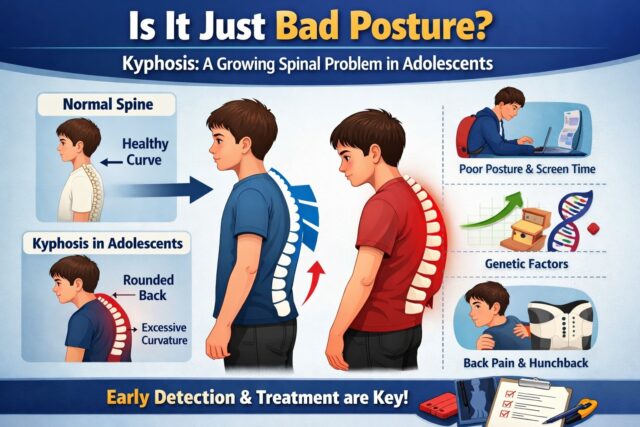
Is It Just Bad Posture? Kyphosis in Adolescents – Causes, Myths & Treatment

Kyphosis in adolescents showing difference between normal spine and rounded back posture
AI generated images

Kyphosis is a spinal condition characterized by an excessive outward curvature of the thoracic (upper) spine, leading to a visible rounded back or hump-like appearance. While a mild curve in the upper spine is normal, an exaggerated curvature in adolescents can affect posture, physical appearance, self-confidence, and in some cases, overall health.

One of the most common forms seen in teenagers is Scheuermann’s kyphosis, a structural condition that develops during periods of rapid growth and is not simply the result of slouching or poor posture.

When Does Kyphosis Commonly Appear?

Kyphosis most often develops during the adolescent growth phase, when the spine is rapidly changing.

Common Age-Related Observations

  1. Most commonly appears between 12–17 years of age
  2. Often becomes noticeable during growth spurts
  3. In many cases, the condition is first observed by parents or teachers, rather than the child
Why Postural Kyphosis Is Increasing Today

Postural kyphosis has become increasingly common due to modern lifestyle habits, including:

  1. Prolonged mobile phone and laptop use
  2. Poor sitting posture during study or screen time
  3. Heavy school backpacks
  4. Rarely diagnosed in children under 10 years of age
Why Does Kyphosis Occur? (Causes)

A. Postural Kyphosis

This is the most common and least severe form. Causes include:

  1. Slouching or bending forward for long periods
  2. Weak back and core muscles
  3. Poor ergonomic habits
B. Scheuermann’s Disease (Structural Kyphosis)

This is a more serious, structural condition.

  1. Abnormal growth of vertebrae (wedge-shaped vertebrae)
  2. Genetic predisposition
  3. Develops during puberty

C. Other Possible Causes

  1. Congenital spinal abnormalities
  2. Trauma or spinal fractures
  3. Osteoporosis (rare in adolescents)
  4. Neuromuscular disorders

Common Myths About Kyphosis

Myth 1: Kyphosis happens only because of bad posture
✔ Truth: Structural kyphosis can be genetic and growth-related

❌ Myth 2: It will correct itself with age
✔ Truth: Some types can worsen if left untreated

❌ Myth 3: Sleeping without a pillow can cure kyphosis
✔ Truth: Pillow use alone does not correct spinal curvature

❌ Myth 4: Surgery is the only solution
✔ Truth: Most adolescent cases improve with exercises, physiotherapy, and bracing

Does Reducing Pillow Use or Sleeping Without a Pillow Help?

There is no scientific evidence to suggest that removing a pillow can cure kyphosis.

However, good sleep posture is important:

  1. Use a thin, supportive pillow that keeps the neck aligned
  2. Sleep on a firm mattress
  3. Avoid very high or multiple pillows

Pillow choice affects neck alignment, not correction of spinal curvature.

Management and Treatment Options

A. Non-Surgical Management (Most Common)

  1. Posture correction exercises
  2. Physiotherapy
  3. Back and core muscle strengthening
  4. Stretching of chest and shoulder muscles
  5. Spinal braces for moderate Scheuermann’s kyphosis in growing children

B. Lifestyle Modifications

  1. Limit screen time
  2. Maintain correct sitting posture
  3. Ergonomic study and workstation setup
  4. Use light, well-fitted school backpacks

C. Surgical Treatment

  1. Rarely required
  2. Reserved for severe cases (curvature greater than 70–80 degrees)

Considered when pain, deformity, or breathing difficulties are present

When Should You See a Doctor?

Consult an orthopedician if:

  1. A visible hump is worsening
  2. The child complains of back pain or stiffness
  3. There is difficulty standing upright
  4. Breathing problems occur
  5. Kyphosis affects self-esteem or daily activities
Medical Departments Involved in Treatment
  1. Orthopedic Surgery
  2. Physical Medicine and Rehabilitation
  3. Radiology

Research Areas

  1. Orthopedic research
  2. Radiology research

Early diagnosis offers the best chance for effective management and recovery.

Guidelines for Mothers to Teach Adolescents

Mothers play a crucial role in prevention, early identification, and support.

Posture Habits

  1. Teach children to sit upright with proper back support
  2. Encourage breaks during long study hours
  3. Discourage slouching while using phones

Physical Activity

  1. Promote daily exercise, yoga, or swimming
  2. Strengthen back and abdominal muscles
  3. Sleep and Study Environment
  4. Use a firm mattress
  5. Maintain proper pillow height
  6. Ensure correct height of study table and chair

Emotional Support

  1. Avoid scolding children about posture
  2. Build awareness, not fear
  3. Encourage confidence and body positivity

Regular Monitoring

  1. Observe posture during growth years
  2. Seek early medical advice if abnormal curvature is noticed
General Statement of Research

This research focuses on kyphosis in adolescents, aiming to understand its causes, prevalence, associated risk factors, common myths, and effective prevention and management strategies, with special emphasis on early detection and parental awareness.

Mother–Child Education Focus

The purpose of this research is to highlight the vital role of mothers in early identification, posture correction, and prevention of kyphosis through healthy daily habits, supportive guidance, and timely medical consultation.

One Woman, Countless Dreams: Why Piyali Basak Inspires Indian Women Today

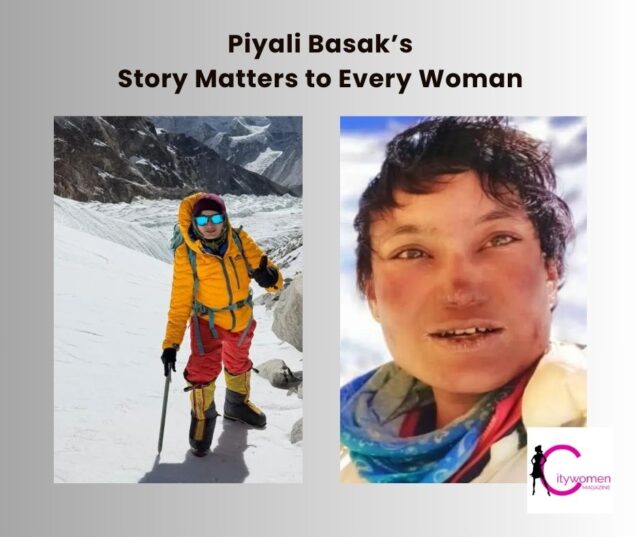
Indian woman mountaineer Piyali Basak
Photo courtesy: nstagram/piyali.basak.90/
The Inspiring Story of Piyali Basak 

In a world where comfort often defines ambition, Piyali Basak chose discomfort—and greatness.

Petite in frame but colossal in courage, Piyali Basak hails from Chandannagar, a small town in West Bengal. By profession, she is a primary school mathematics teacher. By passion—and now by history—she is one of the boldest mountaineers India has ever produced.

In May 2022, Piyali Basak etched her name into global mountaineering history by becoming the first Indian woman to summit Mount Everest (8,848 meters) without the aid of supplementary oxygen—a feat achieved by only around 200 climbers worldwide out of nearly 4,000 who have ever reached the summit.

This was not just a climb. It was a declaration.

A Dream Deferred, Not Denied

Her Everest dream almost ended in 2019, when unpredictable weather in Nepal forced her to abandon the expedition. Many would have taken this as fate’s final answer.

Piyali didn’t.

She returned stronger, better trained, and mentally prepared to face the world’s harshest mountain—on her own lungs. When May 2022 arrived, so did history. Standing atop the world, she unfurled the Indian tricolour, carrying not just a flag, but the aspirations of countless Indian women who are told their dreams are “too ambitious.”

Two Peaks in Two Days: Defying Human Limits

As if Everest wasn’t enough, just two days later, Piyali went on to summit Mount Lhotse, the fourth-highest peak in the world.

Her achievements didn’t stop there:

  1. Mount Dhaulagiri (8,167 m) – First woman to climb it without oxygen (2021)
  2. Mount Manaslu –
  3. Annapurna Expedition – Summited on April 17, 2023, one of the most dangerous peaks
  4. Mount Makalu (8,481 m) – Fifth-highest peak, climbed without oxygen on May 17, 2023

Each summit pushed the limits of human endurance—and each time, she answered with resilience.

Stranded Above Camp IV: The Makalu Ordeal

During her Makalu ascent, fate tested her once again.

Piyali got stranded above Camp IV along with her two guides and Sherpa Ngangwa. For nearly 24 hours, they battled exhaustion, altitude, and the looming threat of death. Rescue finally came through Sherpa Pasang and his team, who brought them down to Camp III. Despite the ordeal, it was later confirmed—she had successfully summited Makalu. With this, Piyali officially became one of only four Indians to have ever conquered the peak.

Even After Everest, She Chose the Classroom

What truly sets her apart?

She never left teaching. Even after conquering the world’s highest peaks, Piyali continues to teach mathematics at a primary school, believing education is the strongest foundation for dreams.

In 2023, she was honored at The Telegraph School Awards for Excellence, where she didn’t just receive applause—she gave back, awarding scholarships to children who refused to surrender to hardship.

Empowering Girls Through Mountains

When she isn’t scaling peaks, Piyali is busy building futures.

She actively:

  1. Trains girls and young adults in mountaineering
  2. Provides technical and vocational guidance
  3. Offers financial support to underprivileged aspirants
  4. Encourages girls to love mountains and believe in their strength

Why Piyali Basak’s Story Matters to Every Woman

Her journey tells us something vital:

  1. You don’t need privilege to dream big
  2. You don’t need perfect conditions to begin
  3. You don’t need to choose between passion and profession

From maths classroom to Mount Everest, Piyali Basak’s life proves that discipline, courage, and optimism can defeat every odd.

At 18, She Chose Antarctica: Kaamya Karthikeyan’s Frozen Journey That Inspired India in 2025

18-year-old Indian young achiever Kaamya Karthikeyan/instagram/kaamya.sahas/

In 2025, when the world was busy redefining success for a new generation, an 18-year-old girl from Mumbai quietly redefined courage.

Her name is Kaamya Karthikeyan—and while most teenagers were navigating classrooms and career choices, she was navigating Antarctica, pulling a heavy sled across endless ice, battling −30°C temperatures, isolation, injury, and her own fears.

On December 27, 2025, Kaamya skied 115 kilometres to the South Pole, becoming the youngest Indian and the second-youngest woman in the world to achieve this extraordinary feat. But her journey was never about breaking records. It was about proving what resilience looks like at 18.

 
View this post on Instagram
 

A post shared by Kaamya Karthikeyan (@kaamya.sahas)

A Dream That Didn’t Wait for Age Kaamya’s story challenges a common belief—that greatness requires time. For her, greatness required discipline, preparation, and belief. A mountaineer for over a decade, she had already completed the Seven Summits, climbing the highest peak on every continent. Yet Antarctica tested her in ways no mountain ever had. “There is no descent at the South Pole,” she once said. “You just keep going.” And she did.
 
View this post on Instagram
 

A post shared by FemaleInSports.com (@femaleinsports)

When Giving Up Was Almost Inevitable Midway through the expedition, Kaamya suffered cold burns serious enough for her team to discuss ending the journey. A rescue pickup was considered. For a young athlete standing on the coldest continent on Earth, the mental battle was harsher than the physical one. Given one day to prove she could continue, Kaamya pushed herself to walk for five gruelling hours on ice, refusing to let fear decide her future. That day changed everything. Training Beyond Comfort Zones Kaamya’s preparation reflects the unseen side of success. Her training began in Gulmarg, Jammu and Kashmir, where she spent hours pulling sleds weighing 40–50 kg, building endurance for long polar days. When ice was unavailable, she adapted. In Delhi, she trained by pulling tractor tyres tied to a harness around her waist, simulating the brutal resistance of Antarctic snow. No glamour. No shortcuts. Just commitment.
Strength Rooted in Values The daughter of an Indian Navy officer, Kaamya grew up surrounded by discipline and mental toughness. These values became her greatest allies in Antarctica—where resilience mattered more than strength. She describes the South Pole expedition as the most difficult challenge of her life, yet also the most defining. Why Kaamya Karthikeyan Matters in 2025 In a year where young voices are reshaping the future, Kaamya stands as a symbol of what focused determination can achieve. She represents: Young Indians dreaming beyond boundaries Girls choosing courage over comfort A generation that prepares quietly and delivers boldly Her journey reminds us that inspiration doesn’t always shout. Sometimes, it skis silently across ice. A Message for Young Dreamers Kaamya Karthikeyan didn’t wait to be “ready.” She trained. She prepared. She endured. And at 18, she stood at the end of the Earth—stronger than fear. In 2025, her story isn’t just an achievement. It’s a reminder: your age does not limit your ambition.  
Click here to read Kamya Karthikeyan’s story in Hindi.

10 Silent Health Issues Indian Women Ignore Until It’s Too Late

10 Silent Health Issues Indian Women Ignore Until It's Too Late
Indian women often overlook their health, leading to severe consequences. Here are 10 silent health issues Indian women often ignore until it's too late.
As an Indian woman, you’re constantly juggling multiple roles – from managing household chores to excelling at work. Amidst all this chaos, it’s easy to overlook your own health. But, ignoring these silent health issues can lead to severe consequences. Here are 10 silent health issues Indian women often ignore until it’s too late:
  1. Anemia: Anemia- Anemia occurs when your body lacks enough healthy red blood cells, which carry oxygen, often due to iron deficiency, vitamin deficiencies (B12, folate), chronic diseases, blood loss (heavy periods, ulcers), bone marrow problems, or inherited conditions like sickle cell.
  2. Heart Disease: Often overlooked, heart disease is a leading cause of death among Indian women. Symptoms like chest pain, breathlessness, and fatigue are often dismissed as stress.
  3. Diabetes: With rising cases of pre-diabetes, Indian women are at a higher risk. Symptoms like frequent urination, sudden hunger, and weight gain are often mistaken for PCOD.
  4. Thyroid Disorders: Hormonal imbalances can lead to thyroid disorders, causing weight gain, fatigue, and mood swings.
  5. Osteoporosis: Often ignored, osteoporosis can lead to brittle bones and fractures.
  6. Breast Cancer: Delayed diagnosis can lead to severe consequences. Regular self-exams and mammograms are crucial.
  7. Cervical Cancer: Often asymptomatic, cervical cancer can be prevented with regular screenings and HPV vaccination.
  8. PCOD: Hormonal imbalance can lead to PCOD, causing irregular periods, weight gain, and infertility.
  9. Mental Health: Depression and anxiety are often stigmatized, leading to delayed treatment.
  10. Vitamin B12 Deficiency: Often overlooked, vitamin B12 deficiency can cause fatigue, weakness, and neurological damage
Remember, your health is your wealth. Don’t ignore these silent health issues. Get regular check-ups, and prioritize your well-being.
“Health is the greatest wealth, don’t ignore it.”