

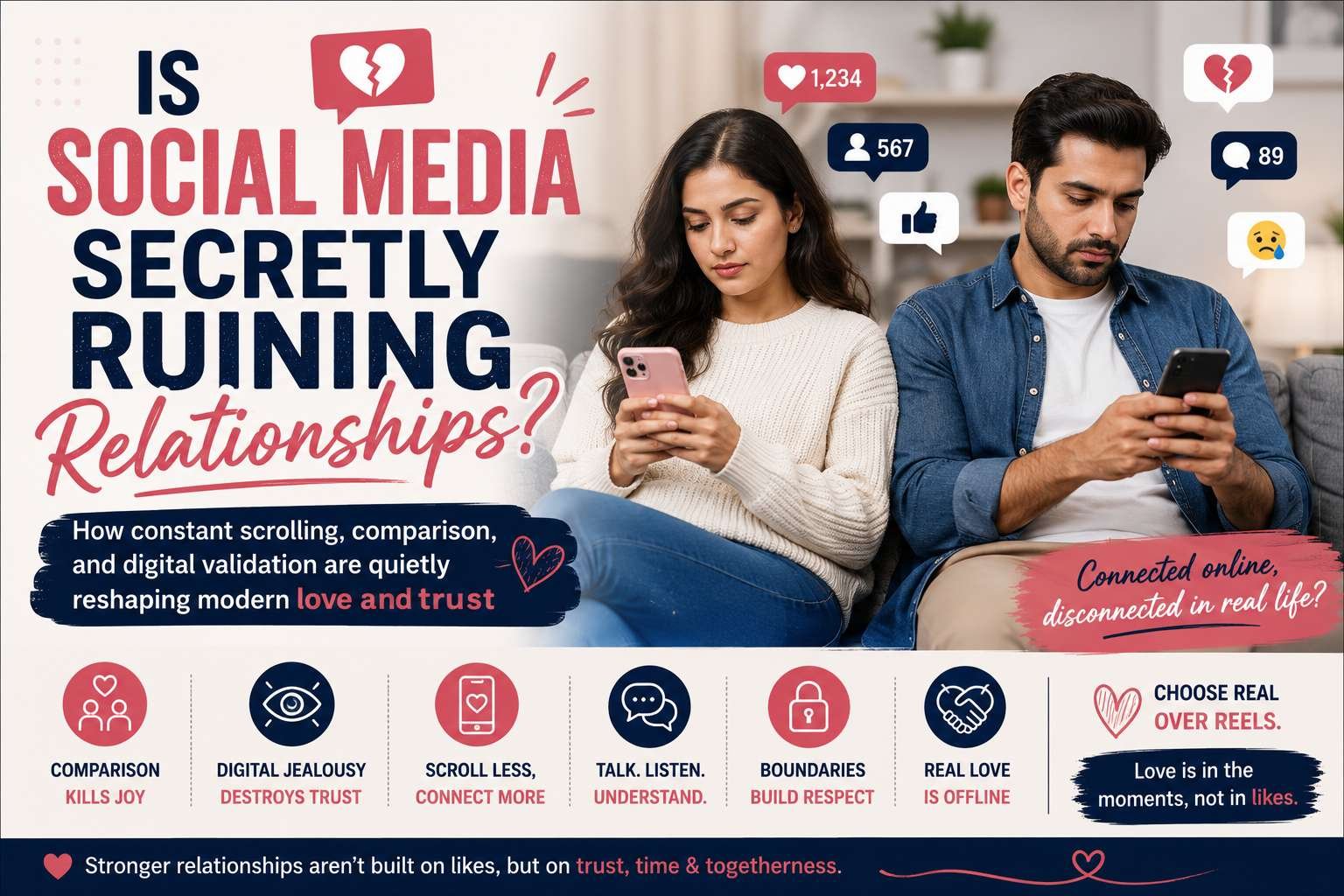
The Double-Edged Sword of Connection
Social media was created to bring people closer — to share moments, stay connected, and express love publicly. Yet, for many couples, it’s becoming a silent source of distance. The same platforms that help people connect can also create comparison, insecurity, and emotional disconnection.
The question isn’t whether social media is good or bad, but how it’s being used — and how it’s subtly shaping modern relationships.
The Illusion of Perfect Love
Every scroll through Instagram or TikTok reveals picture-perfect couples — romantic getaways, surprise proposals, and endless smiles. While these moments are real, they represent only a fraction of reality.
Constant exposure to idealized relationships can make people question their own. When love is measured by likes, gifts, or grand gestures, everyday affection can start to feel inadequate. This comparison trap often leads to dissatisfaction, even in healthy relationships.
The Rise of Digital Jealousy
Social media blurs boundaries between public and private life. A simple “like” or comment can spark insecurity or suspicion. Who is that person liking every post? Why did they reply with a heart emoji?
Digital jealousy is one of the most common modern relationship issues. It often stems from overexposure — knowing too much about a partner’s online interactions. Without open communication, small misunderstandings can grow into major trust issues.
The Validation Loop
Many people unconsciously seek validation through social media — posting couple photos, anniversary messages, or romantic captions to prove happiness. While sharing love online can be sweet, it can also create pressure to maintain a perfect image.
When validation comes from likes instead of genuine connection, relationships risk becoming performative. The focus shifts from being happy together to appearing happy online.
Communication Breakdown
Social media can make communication easier — but also more superficial. Quick texts, emojis, and stories replace deep conversations. Couples may spend hours online but little time truly connecting.
Over time, this digital distance can lead to emotional disconnect. Real intimacy requires presence, not just proximity.
The Comparison Culture
Social media encourages constant comparison — not just of relationships, but of lifestyles, careers, and appearances. When couples compare their relationship to others’, they may start feeling inadequate or unfulfilled.
This comparison culture can create unrealistic expectations. Real relationships involve disagreements, compromises, and growth — things rarely shown online.
How to Protect Relationships in the Digital Age
1. Set Digital Boundaries
Agree on what’s comfortable to share online. Respect each other’s privacy and avoid oversharing personal details.
2. Prioritize Offline Time
Put phones away during meals, dates, or conversations. Quality time without screens strengthens emotional connection.
3. Communicate Openly
If something online bothers you, talk about it calmly. Honest communication prevents misunderstandings and builds trust.
4. Avoid Comparison
Remember that social media shows highlights, not reality. Every relationship has its own rhythm and story.
5. Use Social Media Mindfully
Follow accounts that inspire positivity and growth. Unfollow content that triggers insecurity or negativity.
6. Celebrate Real Moments
Not every special moment needs to be posted. Some memories are more meaningful when kept private.
The Balance Between Online and Real Love
Social media doesn’t have to ruin relationships — it depends on how consciously it’s used. When couples use it to connect, support, and celebrate each other genuinely, it can strengthen bonds. But when it becomes a tool for comparison or validation, it can quietly erode trust and intimacy.
Healthy relationships thrive on communication, respect, and presence — things no algorithm can replace.
