

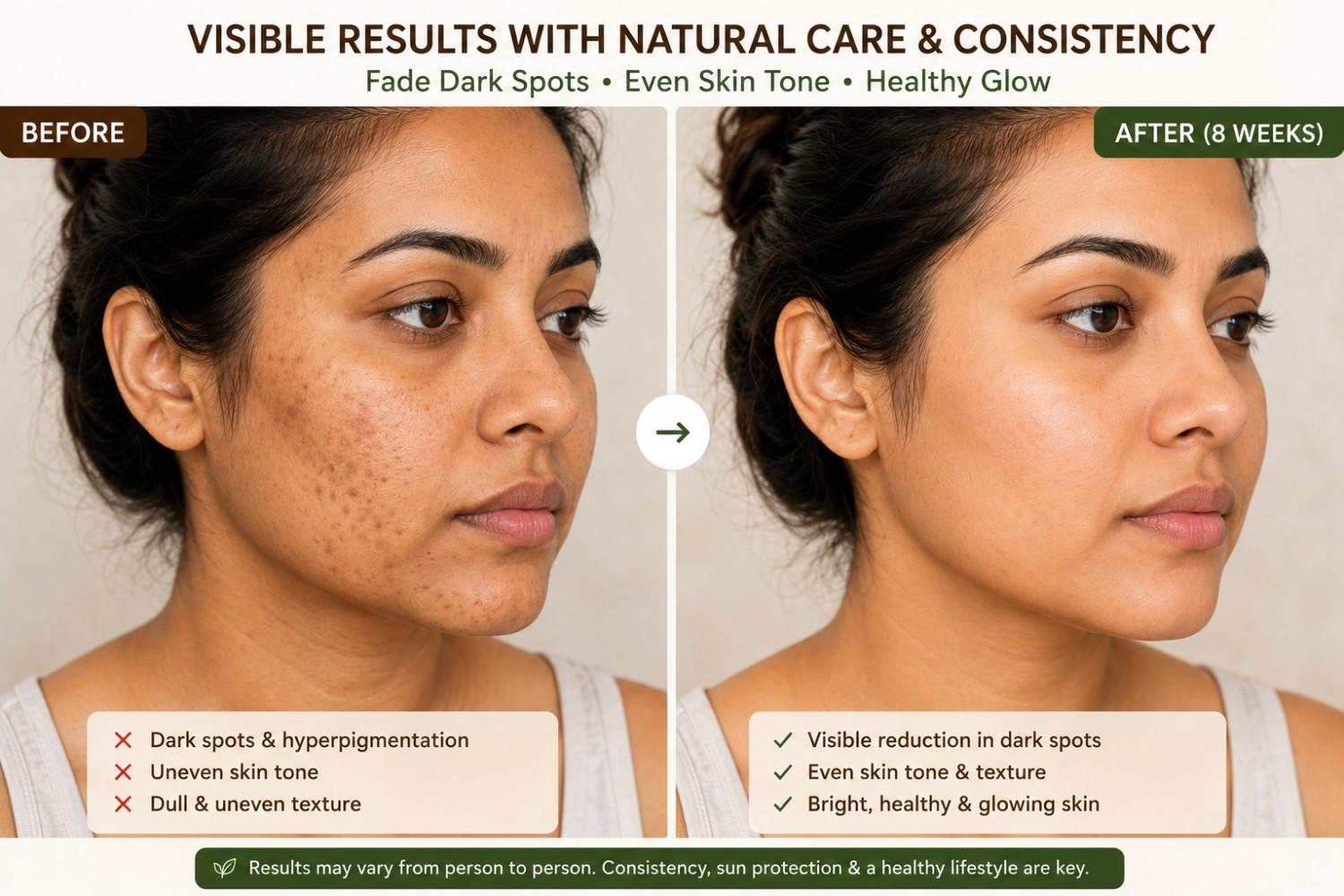
If there’s one skincare struggle that almost every Indian woman knows too well, it’s hyperpigmentation. Those stubborn dark spots from an old pimple, the melasma patches that show up during summer, the uneven tan that lingers long after your trip — it can feel like no matter what you try, your skin just won’t cooperate.
Here’s the thing: Indian skin is beautiful, but it does need a little extra understanding. Because of our naturally higher melanin content, we’re more prone to dark spots and post-inflammatory pigmentation than lighter skin tones. The good news? That also means many of these remedies work especially well on us — when used correctly.
In this guide, we’re sharing the best home remedies for hyperpigmentation on Indian skin, along with what causes it and what you should avoid (yes, lemon juice — we’re looking at you).
What Is Hyperpigmentation and Why Are Indian Women More Prone to It?
Hyperpigmentation happens when your skin produces excess melanin in certain areas, making patches appear darker than the rest of your skin. It’s not dangerous — but it can seriously affect your confidence.
Most Indian women fall into Fitzpatrick skin types III to V, which means we have higher natural melanin content. While this gives us some protection against sun damage, it also means our skin overreacts more strongly to triggers like:
- Sun exposure (the #1 cause of dark spots in India)
- Hormonal changes — especially melasma during pregnancy or while on birth control
- Post-inflammatory hyperpigmentation (PIH) — dark marks left after acne, waxing, or skin injuries
- Pollution — a major concern in Indian cities
- Certain medications
The most common types you’ll see on Indian skin are melasma (brown patches on cheeks, forehead, upper lip), PIH from acne marks, and sun spots.
8 Best Home Remedies for Hyperpigmentation on Indian Skin
1. Turmeric + Honey Mask
Turmeric has been a staple of Indian skincare for centuries — and science backs it up. The active compound curcumin has powerful anti-inflammatory and melanin-inhibiting properties. When combined with honey (a natural humectant and antibacterial agent), it becomes one of the most effective DIY treatments for dark spots.
How to use: Mix ¼ teaspoon of turmeric powder with 1 teaspoon of raw honey. Apply to pigmented areas and leave for 15–20 minutes. Rinse with lukewarm water.
How often: 3 times a week.
Note: Always do a patch test first. Turmeric can temporarily stain the skin yellow — rinse well and use a gentle cleanser after.
2. Aloe Vera Gel (Overnight Treatment)
Aloe vera contains aloesin, a compound that has been shown to reduce melanin production and calm post-inflammatory pigmentation. It’s gentle enough for daily use and works especially well on acne marks and sun spots.
How to use: Apply fresh aloe vera gel directly from the plant to the affected areas before bed. Leave it overnight and rinse in the morning.
How often: Every night for best results.
Pro tip: If you can, grow an aloe plant at home. Fresh gel is far more potent than packaged products.
3. Papaya Enzyme Mask
Ripe papaya contains papain, a natural enzyme that speeds up cell turnover — gently removing the top layer of dead, pigmented skin and revealing brighter skin underneath. It also has vitamin C, which further helps lighten dark spots.
How to use: Mash 2 tablespoons of ripe papaya into a paste. Apply to face or dark-spot areas for 15–20 minutes. Rinse with cool water.
How often: Twice a week.
4. Ubtan (Traditional Gram Flour + Turmeric Scrub)
Our dadi-nani knew what they were doing. Ubtan — a traditional Indian paste made from gram flour (besan), turmeric, and milk or rose water — is a centuries-old remedy for even skin tone. Besan acts as a gentle exfoliant, milk contains lactic acid that brightens skin, and turmeric fights inflammation.
How to use: Mix 2 tablespoons besan + a pinch of turmeric + enough raw milk to form a paste. Apply to face and body, let dry partially, then gently scrub off with circular motions. Rinse well.
How often: Once or twice a week.
5. Potato Slices for Dark Spots
This one sounds too simple to work — but potato juice contains catecholase, an enzyme that has mild skin-lightening properties, as well as vitamin C. It works best on fresh, recent dark spots rather than deep-seated pigmentation.
How to use: Slice a raw potato and rub the cut side directly on dark spots for 3–5 minutes. Leave the juice on for 10 minutes, then rinse.
How often: Daily on targeted areas.
6. Tomato Pulp + Yoghurt Mask
Tomatoes are rich in lycopene and vitamin C, which protect against UV-induced pigmentation. Yoghurt contains lactic acid, a gentle AHA that exfoliates dead skin cells and lightens spots over time.
How to use: Mix 1 tablespoon of tomato pulp with 1 tablespoon of plain yoghurt. Apply to face for 15 minutes. Rinse with cool water.
How often: 2–3 times a week.
7. Niacinamide (Vitamin B3) — The Skincare Hero
While not a “kitchen remedy,” niacinamide (vitamin B3) deserves a special mention because it is one of the most researched, dermatologist-recommended ingredients for hyperpigmentation on Indian skin. It works by preventing melanin from reaching the surface of your skin and is safe for long-term daily use.
Look for serums with 5–10% niacinamide. Brands like Minimalist, Dot & Key, and Plum all offer affordable options available in India.
How to use: Apply after cleansing, before moisturiser, morning and/or night.
8. Oatmeal Gentle Scrub
Oatmeal is a soothing, gentle exfoliant that removes dead skin cells — including those that contain melanin — without causing irritation or dryness. It’s ideal for sensitive skin types and can help with overall skin tone over time.
How to use: Mix 2 tablespoons of ground oats with 1 tablespoon honey and a splash of milk. Massage gently onto the face in circular motions for 2 minutes. Rinse with lukewarm water.
How often: Once a week.
What You Should AVOID Doing
Some popular “hacks” can actually make hyperpigmentation worse on Indian skin. Please avoid these:
- Lemon juice directly on skin — Despite being widely recommended online, lemon juice is highly acidic and can cause phototoxic reactions on Indian skin, making pigmentation worse after sun exposure.
- Picking or squeezing pimples — This is the fastest way to create long-lasting dark spots.
- Skipping sunscreen — This is the single biggest mistake. Without SPF, no remedy will work. Every dark spot will keep getting darker with sun exposure.
- Scrubbing too hard — Over-exfoliating causes micro-tears and more inflammation, which leads to — you guessed it — more dark spots.
- Trying too many things at once — Pick one or two remedies and be consistent. Results take 6–12 weeks.
The One Non-Negotiable: Sunscreen Every. Single. Day.
We cannot stress this enough. Sunscreen is not optional if you’re treating hyperpigmentation. UV rays directly stimulate melanin production — meaning every hour you spend without SPF is working against every remedy you’re trying.
Use a broad-spectrum SPF 30 or higher, even on cloudy days, even indoors near windows. Re-apply every 2–3 hours if you’re outdoors.
Affordable, non-greasy options that work well on Indian skin: Neutrogena Ultra Sheer, Dot & Key SPF 50, and Minimalist SPF 50 Aqua Gel.
When to See a Dermatologist
Home remedies work wonderfully for mild to moderate hyperpigmentation — but if you’ve been consistent for 8–12 weeks and see no improvement, it may be time to consult a dermatologist. They can recommend:
- Chemical peels (glycolic or lactic acid) — effective but must be done carefully on Indian skin
- Tranexamic acid or azelaic acid prescriptions
- Alpha arbutin-based products
- Q-switched laser treatments (with caution on darker skin tones)
Frequently Asked Questions
How long do home remedies take to work on Indian skin? Most home remedies take 6–12 weeks of consistent use to show visible results. Be patient and don’t switch products too frequently.
Can I use multiple remedies at the same time? It’s better to pick 1–2 remedies and stick to them. Combining too many ingredients can irritate your skin and worsen pigmentation.
Is turmeric safe for daily use on the face? Turmeric is safe but should not be used daily as it can stain the skin temporarily. 3 times a week is ideal.
Does hyperpigmentation go away on its own? Very mild pigmentation can fade on its own over time, but most dark spots need active treatment and daily sun protection to resolve.
Which is the best ingredient for hyperpigmentation on Indian skin? Niacinamide, alpha arbutin, and azelaic acid are among the safest and most effective ingredients for Indian skin tones, according to dermatologists.
Hyperpigmentation on Indian skin is extremely common — and very treatable. The key is consistency, sun protection, and choosing remedies that work with your skin’s natural characteristics rather than against them. Start with turmeric + honey or aloe vera, add a niacinamide serum to your routine, and never — ever — skip your SPF.
Your skin has its own beautiful depth of colour. These remedies are not about changing it — they’re about helping it look its clearest, most even, most radiant self.
Have you tried any of these remedies? Share your experience in the comments below! And if you found this guide helpful, don’t forget to share it with a friend who might need it.
