

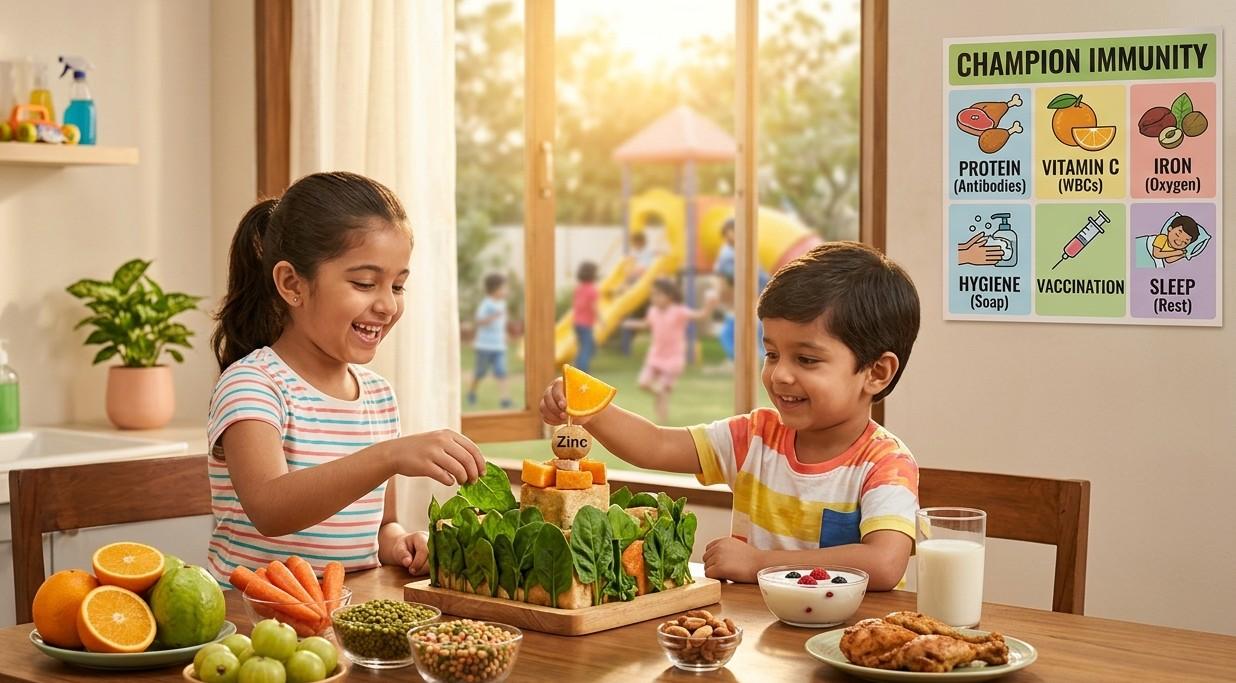
Immunity is the body’s natural defense system that protects children from infections caused by bacteria, viruses, and other harmful microorganisms. In growing children, proper nutrition plays a critical role in developing and maintaining a strong immune system. Without adequate nutrients, the immune response becomes weak, increasing the risk of frequent illnesses.
Bacterial Infections That Can Affect Immunity
Streptococcus pneumoniae- cause pneumonia, ear infection and sinus
Escherichia coil (E.coli)- cause stomach infection and diarrhea
Salmonella- cause typhoid and food poisoning
Mycobacterium tuberculosis- causes tuberculosis
Viruses That Attack Children Quickly
Influenza virus- causes high fever and body pain; during seasonal changes
Respiratory syncytial virus- cause cough, cold and breathing difficulty
Rotavirus- causes severe diarrhea
Measles virus- cause fever and rash
Dengue virus- spread by mosquito’s , cause high fever and low platelets
Understanding Immunity in Children – Children’s immune systems are still developing. They rely heavily on:
Innate immunity (natural protection from birth)
Adaptive immunity (develops after exposure to infections or vaccines)
Balanced nutrition supports both systems and helps immune cells function efficiently.
Key Nutrients That Strengthen Immunity
Protein – The Building Block
Essential for production of antibodies and immune cells
Sources: Eggs, milk, dal, pulses, nuts, chicken
Vitamin C – Infection Fighter
Boosts white blood cell (leukocytes) production
Helps reduce severity of colds
Sources: Amla, oranges, lemon, guava
Vitamin A – Protective Barrier
Maintains healthy skin and mucous membranes (first line of defense)
Sources: Carrots, spinach, sweet potatoes
Vitamin D – Immune Regulator
Modulates immune response
Sunlight exposure + fortified milk
Zinc – Healing Mineral
Supports immune cell development (regeneration)
Sources: Nuts, seeds, whole grains
Iron – Oxygen Support
Prevents anemia ( a condition where you lack enough healthy red blood cells to carry adequate oxygen to your body’s tissues), improves resistance
Sources: Green leafy vegetables, jaggery, legumes
Why Do These Infections Spread Fast in Children?
Close contact in schools
Sharing toys and food
Poor hand hygiene
Low vaccination coverage
Weak nutrition
Precautions to Prevent Infections in Children
Maintain a Balanced Diet
Include proteins (eggs, dal, milk, nuts)
Give vitamin C-rich fruits (orange, amla, guava)
Ensure iron and zinc intake
Limit junk food and sugary snacks
Encourage homemade, fresh meals
Proper nutrition helps the immune system fight infections effectively.
Teach Proper Hygiene
Wash hands with soap for 20 seconds (before eating, after toilet, after playing)
Keep nails trimmed and clean
Avoid sharing water bottles, lunch boxes, towels
Teach children to cover mouth while coughing or sneezing
Good hygiene reduces spread of germs.
Ensure Timely Vaccination
Vaccines protect children from serious diseases like:
Measles
Polio
Chickenpox
Follow the national immunization schedule timely
Ensure Adequate Sleep
6–12 years: 9–12 hours daily
Teenagers: 8–10 hours
Sleep restores immune cells and improves infection resistance.
Encourage Outdoor Play
Sunlight helps Vitamin D production
Physical activity improves blood circulation
Reduces stress and boosts immunity
At least 1 hour of outdoor activity daily is recommended.
Maintain Proper Hydration
Encourage regular water intake
Avoid excessive soft drinks and packaged juices
Water helps flush toxins and supports immune function.
Keep Home Environment Clean
Regular cleaning of toys and surfaces
Proper ventilation in rooms
Avoid exposure to cigarette smoke
Limit Screen Time
Excess screen time reduces physical activity
Can disturb sleep cycle
Weakens overall immunity indirectly
Manage Stress
Avoid excessive academic pressure
Encourage open communication
Support emotional well-being
Stress hormones can weaken immune response.
Consult Doctor When Necessary
Seek medical help if:
Fever lasts more than 3 days
Frequent infections occur
Child shows weakness or poor growth
Early medical intervention prevents complications.
Role of Gut Health – Nearly 70% of immune cells are located in the gut as healthy gut bacteria help fight infections.
Include probiotics (curd, yogurt)
Fiber-rich foods (fruits, vegetables, whole grains)
Avoid excessive processed food
Effects of Poor Nutrition – Children with poor diet may experience:
Frequent colds and infections
Slow wound healing
Fatigue and weakness
Poor growth and development
Malnutrition remains a major issue that affects children
Modern Lifestyle Concerns
Increased junk food consumption
Reduced outdoor activity
High screen time
Irregular sleep patterns
These factors weaken immunity despite availability of food.
What Are Packaged Foods? – Packaged foods include:
Chips, biscuits, instant noodles
Sugary cereals
Soft drinks and flavoured juices
Processed meats
Frozen ready-to-eat meals
These foods are often high in salt, sugar, unhealthy fats, preservatives, and artificial colors.
How Packaged Food Weakens Immunity – High Sugar Content
Excess sugar suppresses white blood cell function (increases the risk of developing Type 2 diabetes)
Increases risk of infections
Leads to obesity and inflammation
Low Nutritional Value
Lacks essential vitamins (A, C, D) and minerals (iron, zinc)
Causes micronutrient deficiencies
Harmful Fats (Trans Fats)
Increase inflammation in the body
Affect heart health even in children
Artificial Additives & Preservatives
May disturb gut bacteria
Affect digestion and immune response
What Parents Should follow
Limit packaged snacks to occasional treats
Encourage home-cooked meals
Replace chips with fruits and nuts
Read food labels (check sugar & sodium levels)
Promote healthy lunchboxes for school
Prevention is better than cure. A combination of proper nutrition, hygiene, vaccination, sleep, and physical activity plays a major role in protecting children from infections and building long-term immunity.
