

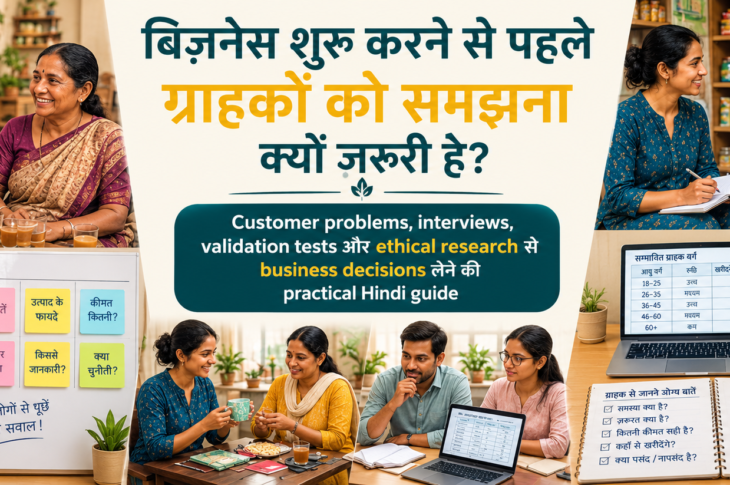
कल्पना कीजिए, एक महिला अपने business idea को लेकर बेहद उत्साहित है। वह logo बनवाती है, packaging पर पैसा लगाती है, Instagram page तैयार करती है और product बनाने में समय लगा देती है। लेकिन उसने अभी तक यह ठीक से नहीं समझा कि उसके संभावित ग्राहक कौन हैं, उनकी वास्तविक समस्या क्या है, वे अभी उसे कैसे हल करते हैं और किस चीज के लिए भुगतान करने को तैयार होंगे।
Launch के बाद likes तो मिलते हैं, लेकिन enquiries और sales कम रहती हैं। इसका अर्थ यह जरूरी नहीं कि idea खराब है। हो सकता है customer problem, audience, offer, timing, pricing, messaging या delivery model को बेहतर समझने की जरूरत हो।
Customer को समझना business का पहला practical step क्यों है?
बिजनेस शुरू करने से पहले ग्राहकों को समझना अनुमान लगाने के बजाय सीखने की प्रक्रिया है। इसका उद्देश्य लोगों को manipulate करना या हर suggestion को मान लेना नहीं, बल्कि यह जानना है कि किसके लिए कौन–सी समस्या महत्वपूर्ण है, वह समस्या कब आती है, लोग अभी क्या करते हैं और आपका प्रस्ताव कब उपयोगी हो सकता है।
Customer insights product features, service steps, packaging, delivery, pricing, support और marketing priorities तय करने में मदद कर सकते हैं। Research founder के assumptions को test करती है; यह केवल अपने idea की पुष्टि करने का तरीका नहीं है। फिर भी कोई interview या छोटा test सफलता की guarantee नहीं देता।
|
याद रखें: Customer understanding validation, pricing, product design, marketing, operations और sustainable growth को बेहतर दिशा दे सकती है, लेकिन यह हर business के लिए universal formula नहीं है। |
Idea और real customer problem में अंतर
“मुझे यह product पसंद है” और “मैं इस problem को solve करने के लिए समय या पैसा लगाऊंगा या लगाऊंगी” अलग संकेत हैं। किसी idea को business opportunity मानने से पहले problem को customer के शब्दों में लिखें: कौन, किस situation में, कौन–सी difficulty अनुभव करता है, उसका impact क्या है और वह अभी क्या करता है?
Problem functional, emotional, social, financial, time-related या access-related हो सकती है। लेकिन हर claimed problem business opportunity नहीं होती। उसकी urgency, frequency, consequence और existing alternatives पर ध्यान दें।
- साफ सवाल: समस्या किसके सामने आती है और किस context में?
- वास्तविक impact: इसमें समय, पैसा, effort, stress या access की कौन–सी लागत है?
- वर्तमान व्यवहार: customer आज इसे कैसे संभालता है?
अपना ideal customer नहीं, specific customer segment कैसे define करें?
“सबके लिए” target audience अक्सर बहुत broad होती है। शुरुआत में एक स्पष्ट segment चुनें, जैसे किसी शहर के working parents, first-time home bakers, छोटे local retailers या किसी खास जरूरत की तैयारी कर रहे students। Segment को केवल age या gender से नहीं, बल्कि situation, behaviour, problem, budget, access और decision-making context से define करें।
Primary customer, user, buyer, decision-maker और beneficiary अलग हो सकते हैं। उदाहरण के लिए, बच्चों की learning service में बच्चा user, माता–पिता buyer और परिवार beneficiary हो सकता है। किसी group के बारे में stereotype बनाने के बजाय उससे सम्मानपूर्वक सीखें।
|
भूमिका |
अर्थ |
उदाहरण |
|
Primary customer |
जिसकी समस्या पर focus है |
व्यस्त working parent |
|
User |
जो product या service इस्तेमाल करता है |
बच्चा या employee |
|
Buyer |
जो भुगतान या खरीद का निर्णय लेता है |
माता–पिता या business owner |
Customer की समस्या, context और urgency समझना
“आपको क्या चाहिए?” से आगे बढ़कर past behaviour पूछें। समस्या आखिरी बार कब आई, उस समय क्या किया गया, किसे involve किया गया और कौन–सी बाधा सामने आई—इन सवालों से context मिलता है। Budget, time, transport, language, disability access, trust, safety, technology, family approval और delivery limitations भी समझें। Founder की सुविधा के अनुसार समस्या को छोटा या बड़ा न बनाएं।
- पूछें: समस्या कितनी बार आती है और उसे टालने का क्या असर होता है?
- समझें: कौन decision लेता है और किस बात से भरोसा बनता या टूटता है?
- नोट करें: customer के शब्द, भावनाएं, constraints और workaround।
लोग अभी क्या कर रहे हैं? Alternatives और competitors को देखना
Competitor केवल समान product बेचने वाला business नहीं है। DIY, free content, existing supplier, local service, किसी दोस्त की मदद, कुछ न करना या problem को postpone करना भी alternatives हैं। देखें कि लोग किन benefits, prices, channels, complaints और compromises के आधार पर चुनते हैं।
Copy करने के बजाय gap खोजें—जैसे faster delivery, clearer instructions, local language, flexible package, reliable support या बेहतर access। Public reviews और comments useful signals हैं, complete truth नहीं। उन्हें direct conversations और ethical observation के context में पढ़ें।
Customer interviews कैसे करें?
Interview को sales pitch न बनाएं। शुरुआत में permission लें और purpose स्पष्ट करें। Open-ended, neutral questions पूछें, silence से न घबराएं और व्यक्ति को सोचने का समय दें। Customer interviews scientific proof या पूरी market का exact representation नहीं होते; वे patterns और differences समझने में मदद करते हैं।
- इस problem का सामना आपको आखिरी बार कब हुआ और आपने तब क्या किया?
- उस solution में क्या अच्छा था और क्या frustrating लगा?
- इसे solve करने में आपका time, money या effort कितना लगता है?
- खरीदने या कोशिश करने का decision कौन लेता है?
- किस situation में आप किसी solution को छोड़ देंगे?
अच्छे questions और leading questions में अंतर
“क्या आपको हमारा app बहुत useful लगेगा?” की जगह पूछें, “आप अभी यह काम कैसे करते हैं?” “क्या ₹X उचित price है?” की जगह पूछें, “आपने पहले इस तरह के solution पर क्या खर्च किया है?” “क्या आप launch पर खरीदेंगे?” की जगह पूछें, “आपने आखिरी बार ऐसा कब खरीदा और क्यों?”
Compliments, interest और willingness to pay में फर्क
“अच्छा idea है” encouragement हो सकता है, demand का प्रमाण नहीं। Like, poll response, signup, interview participation, referral, repeat use, deposit, pre-order और paid pilot अलग–अलग strength के signals हैं। किसी एक signal को guarantee न मानें।
Small validation tests: pilot, sample, pre-order और service trial
- Concierge test: product बनाने से पहले सीमित customers को manually service देकर सीखें।
- Prototype या sample: छोटा version दिखाकर usability, clarity और objections समझें।
- Pilot: तय audience, सीमित scope, स्पष्ट timeline और feedback process रखें।
- Pre-order या waitlist: delivery, capacity, refund और terms पहले स्पष्ट करें; click को purchase न मानें।
हर test में hypothesis, audience, success signal, cost, risk और review date लिखें।
Customer feedback को product decisions में कैसे बदलें?
Feedback को raw comments की तरह जमा न करें। Need, confusion, price, access, trust, feature, timing और delivery जैसी themes में group करें। “क्या कहा गया?”, “किस context में कहा गया?” और “किसने कहा?”—तीनों नोट करें। हर request को product में जोड़ना जरूरी नहीं; frequency, importance, strategic fit, capacity और safety देखकर priority तय करें।
Negative feedback को insult या total failure न मानें। यह unclear offer, गलत segment या कमजोर delivery process का signal हो सकता है। Decision log रखें कि क्या बदला, क्या नहीं बदला और क्यों। Customers से हर suggestion मानने का promise न करें।
Pricing और offer design में customer understanding की भूमिका
Customer conversations से willingness, budget range, perceived value, buying frequency और payment friction समझने में मदद मिल सकती है, लेकिन exact price केवल interviews से तय नहीं होता। Offer में scope, outcome, delivery time, support, revisions, access और exclusions स्पष्ट रखें।
अलग जरूरतों के लिए starter option, pilot या सीमित service scope बनाया जा सकता है, पर confusing packages न बनाएं। Costs, time, overhead, taxes, risk और capacity का हिसाब रखें। Pricing, accounting और tax guidance के लिए qualified local professional से सलाह लें। Discount को demand का substitute न बनाएं।
Marketing language customer की भाषा में कैसे लिखें?
Customer की वास्तविक situation और शब्दों से headlines, product descriptions, FAQs और calls to action लिखें। “सबसे अच्छा”, “guaranteed” या fear-based claims से बचें। Specific, honest और verifiable benefit बताएं। Customer stories, testimonials और photos के लिए permission लें और जरूरत हो तो sensitive details anonymize करें।
Likes और followers के बजाय qualified enquiries, trials, repeat use, referrals, retention, support quality और profitability जैसे उपयोगी signals देखें। Problem को exploit या shame न करें; language, accessibility और representation का ध्यान रखें।
Privacy, consent और ethical research
Personal data responsibly collect करें। Participants को research का purpose बताएं, informed consent लें, minimum necessary information रखें और secure handling अपनाएं। बिना consent recording, deceptive survey, fake pre-order, spam, pressure selling, discriminatory targeting या data misuse न करें।
|
सावधानी: Privacy, legal, financial, tax, licensing, regulatory, product-safety, health, food, children’s products और sensitive services से जुड़े सवालों में local laws, relevant authorities और qualified legal या professional advisers की guidance लें। यह लेख universal substitute नहीं है। |
अलग–अलग customers और inclusive research
केवल friends, family या online followers से research करने पर sample सीमित हो सकता है। Relevant communities तक respectful और जरूरत पड़ने पर compensated outreach करें। अलग ages, skin tones, genders, disabilities, languages, locations, income levels, family situations और digital access को ध्यान में रखें।
Vulnerable groups, children, health needs, financial hardship या personal safety से जुड़ी research में extra caution और professional review जरूरी हो सकती है। किसी को personal story, खरीद या sensitive data share करने के लिए pressure न दें।
Common mistakes और बेहतर alternatives
- Logo पहले, problem बाद में: पहले problem conversations और छोटा test करें।
- Friends की तारीफ को demand मानना: real behaviour, enquiries और commitments देखें।
- हर customer को target करना: एक शुरुआती segment और स्पष्ट use case चुनें।
- Interview को sales pitch बनाना: neutral questions पूछें और पहले सुनें।
- सिर्फ कही बातों पर भरोसा करना: past behaviour और current alternatives पूछें।
- हर feedback को feature बनाना: themes, strategy, capacity और safety के आधार पर prioritize करें।
- Free sample से unlimited expectations बनाना: scope, timeline और feedback terms स्पष्ट करें।
- Research कभी खत्म न करना: bounded pilot और review date तय करें।
Do और Don’t: ethical customer learning
- Don’t: अपने idea को हर customer पर थोपें।
- Do: पहले उनकी situation और current solution समझें।
- Don’t: “सबको चाहिए” को evidence मानें।
- Do: specific segment और observable behaviour देखें।
- Don’t: leading questions पूछें।
- Do: past behaviour और open-ended questions पर ध्यान दें।
- Don’t: बिना consent data collect या record करें।
- Do: transparent, minimal और secure research करें।
- Don’t: likes को sales समझें।
- Do: trials, repeat use और paid commitment जैसे signals देखें।
- Don’t: feedback को personal criticism मानें।
- Do: उसे learning input की तरह देखें।
Practical customer-understanding framework: LISTEN
- L — Locate: किस specific customer segment और situation पर focus है?
- I — Investigate: problem, context, current alternatives और urgency पूछें।
- S — Separate: compliments, interest, usage और willingness to pay को अलग signals मानें।
- T — Test: smallest safe pilot, prototype, sample या service trial चलाएं।
- E — Evaluate: patterns, objections, costs, risks और outcomes review करें।
- N — Next step: offer, price, message या segment में एक bounded change करें और review date तय करें।
7-day customer clarity reset
इसे guaranteed launch plan नहीं, बल्कि focused learning experiment समझें। इसका लक्ष्य perfect answer पाना नहीं, बल्कि assumptions को छोटे और ethical steps से जांचना है।
- Day 1: idea को एक sentence में लिखें और customer, problem तथा current alternative अलग–अलग note करें।
- Day 2: एक specific customer segment चुनें और उसके assumptions लिखें।
- Day 3: पाँच neutral interview questions तैयार करें और privacy तथा consent approach तय करें।
- Day 4: कम से कम दो respectful conversations या existing customer interactions review करें।
- Day 5: compliments, behaviour, objections और buying signals को अलग categories में रखें।
- Day 6: pilot, sample, waitlist, enquiry या limited service trial में से एक छोटा test design करें।
- Day 7: सीखों की review करें और अगले 30 दिनों के लिए एक priority, measurable signal और review date तय करें।
आज से शुरू करने के 5 छोटे कदम
- Business idea के बजाय customer problem को plain language में लिखें।
- एक specific segment चुनें, “सबके लिए” नहीं।
- तीन open-ended questions तैयार करें।
- एक current alternative और उसकी limitation note करें।
- एक छोटा, ethical validation test और उसकी review date तय करें।
Mini checklist
- मेरा primary customer कौन है, और user तथा buyer कौन हैं?
- Customer किस situation में problem अनुभव करता है?
- वह अभी इसे कैसे solve करता है?
- क्या मैंने past behaviour के बारे में पूछा है?
- क्या मेरे questions neutral हैं?
- क्या मैं compliments और willingness to pay को अलग समझती हूं?
- क्या अलग access, language, income या disability needs दिख रही हैं?
- क्या test का scope, cost, risk और success signal clear है?
- क्या data collection consent-based, minimal और secure है?
- अगले 30 दिनों में मेरा एक customer-learning step क्या होगा?
शुरुआत perfect नहीं, thoughtful होनी चाहिए
बिजनेस शुरू करने से पहले ग्राहकों को समझना delay नहीं, responsible preparation है। इसका अर्थ यह नहीं कि founder को हर answer launch से पहले मिल जाएगा या हर customer की बात माननी होगी। इसका अर्थ है कि आप assumptions को facts समझने के बजाय curiosity, conversations और छोटे tests से सीखना चुनती हैं।
आपको perfect product, perfect audience या perfect confidence की जरूरत नहीं। एक real customer problem, कुछ thoughtful questions, एक ethical experiment और सीखों की ईमानदार review से शुरुआत करें। Customer को समझना केवल sales बढ़ाने का तरीका नहीं; यह ऐसा business बनाने की दिशा है जो अधिक relevant, accessible, sustainable और भरोसेमंद हो।
