







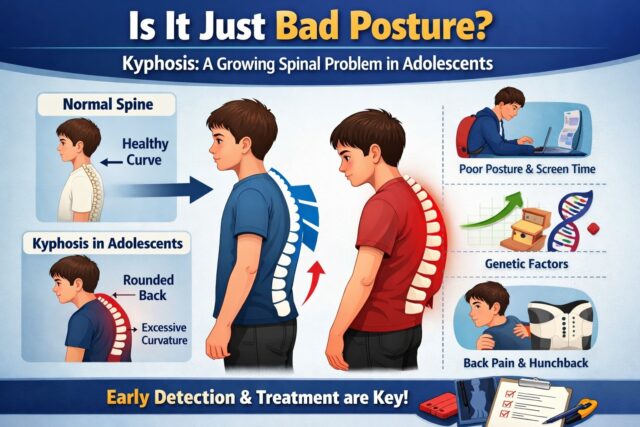
Kyphosis is a spinal condition characterized by an excessive outward curvature of the thoracic (upper) spine, leading to a visible rounded back or hump-like appearance. While a mild curve in the upper spine is normal, an exaggerated curvature in adolescents can affect posture, physical appearance, self-confidence, and in some cases, overall health.
One of the most common forms seen in teenagers is Scheuermann’s kyphosis, a structural condition that develops during periods of rapid growth and is not simply the result of slouching or poor posture.
When Does Kyphosis Commonly Appear?
Kyphosis most often develops during the adolescent growth phase, when the spine is rapidly changing.
Common Age-Related Observations
- Most commonly appears between 12–17 years of age
- Often becomes noticeable during growth spurts
- In many cases, the condition is first observed by parents or teachers, rather than the child
Why Postural Kyphosis Is Increasing Today
Postural kyphosis has become increasingly common due to modern lifestyle habits, including:
- Prolonged mobile phone and laptop use
- Poor sitting posture during study or screen time
- Heavy school backpacks
- Rarely diagnosed in children under 10 years of age
Why Does Kyphosis Occur? (Causes)
A. Postural Kyphosis
This is the most common and least severe form. Causes include:
- Slouching or bending forward for long periods
- Weak back and core muscles
- Poor ergonomic habits
B. Scheuermann’s Disease (Structural Kyphosis)
This is a more serious, structural condition.
- Abnormal growth of vertebrae (wedge-shaped vertebrae)
- Genetic predisposition
- Develops during puberty
C. Other Possible Causes
- Congenital spinal abnormalities
- Trauma or spinal fractures
- Osteoporosis (rare in adolescents)
- Neuromuscular disorders
Common Myths About Kyphosis
❌ Myth 1: Kyphosis happens only because of bad posture
✔ Truth: Structural kyphosis can be genetic and growth-related❌ Myth 2: It will correct itself with age
✔ Truth: Some types can worsen if left untreated❌ Myth 3: Sleeping without a pillow can cure kyphosis
✔ Truth: Pillow use alone does not correct spinal curvature❌ Myth 4: Surgery is the only solution
✔ Truth: Most adolescent cases improve with exercises, physiotherapy, and bracing
Does Reducing Pillow Use or Sleeping Without a Pillow Help?
There is no scientific evidence to suggest that removing a pillow can cure kyphosis.
However, good sleep posture is important:
- Use a thin, supportive pillow that keeps the neck aligned
- Sleep on a firm mattress
- Avoid very high or multiple pillows
Pillow choice affects neck alignment, not correction of spinal curvature.
Management and Treatment Options
A. Non-Surgical Management (Most Common)
- Posture correction exercises
- Physiotherapy
- Back and core muscle strengthening
- Stretching of chest and shoulder muscles
- Spinal braces for moderate Scheuermann’s kyphosis in growing children
B. Lifestyle Modifications
- Limit screen time
- Maintain correct sitting posture
- Ergonomic study and workstation setup
- Use light, well-fitted school backpacks
C. Surgical Treatment
- Rarely required
- Reserved for severe cases (curvature greater than 70–80 degrees)
Considered when pain, deformity, or breathing difficulties are present
When Should You See a Doctor?
Consult an orthopedician if:
- A visible hump is worsening
- The child complains of back pain or stiffness
- There is difficulty standing upright
- Breathing problems occur
- Kyphosis affects self-esteem or daily activities
Medical Departments Involved in Treatment
- Orthopedic Surgery
- Physical Medicine and Rehabilitation
- Radiology
Research Areas
- Orthopedic research
- Radiology research
Early diagnosis offers the best chance for effective management and recovery.
Guidelines for Mothers to Teach Adolescents
Mothers play a crucial role in prevention, early identification, and support.
Posture Habits
- Teach children to sit upright with proper back support
- Encourage breaks during long study hours
- Discourage slouching while using phones
Physical Activity
- Promote daily exercise, yoga, or swimming
- Strengthen back and abdominal muscles
- Sleep and Study Environment
- Use a firm mattress
- Maintain proper pillow height
- Ensure correct height of study table and chair
Emotional Support
- Avoid scolding children about posture
- Build awareness, not fear
- Encourage confidence and body positivity
Regular Monitoring
- Observe posture during growth years
- Seek early medical advice if abnormal curvature is noticed
General Statement of Research
This research focuses on kyphosis in adolescents, aiming to understand its causes, prevalence, associated risk factors, common myths, and effective prevention and management strategies, with special emphasis on early detection and parental awareness.
Mother–Child Education Focus
The purpose of this research is to highlight the vital role of mothers in early identification, posture correction, and prevention of kyphosis through healthy daily habits, supportive guidance, and timely medical consultation.