

Regenerative medicine acts as a new and promising field in healthcare, based on the body’s own ability for self-repair. And not just addressing symptoms like discomfort or rigidity, this area of medicine strives to repair and restore damaged tissues. Especially beneficial for orthopedic and degenerative ailments, including osteoarthritis, joint pain, back issues, ligament tears, and the gradual deterioration of bones and cartilage that comes with aging.
Basically, regenerative medicine consists of stem cells, growth factors, exosomes, platelet-rich fibrin (PRF), and platelet-rich plasma (PRP), which are usually pulled out from the patient’s own blood or tissues. Post the process, the components are administered into the affected area to reduce inflammation, speed up healing, and ease tissue repair.
Exosomes are an important component in brain health, as they help in cellular interaction and the transportation of proteins, lipids, and genetic material that regulate inflammation, neuroprotection, and regeneration. Moreover, growth factors like NGF, BDNF, and VEGF increase the healing processes by initiating neurogenesis, angiogenesis, and cell growth. Platelet-Rich Fibrin (PRF), obtained from the patient’s blood, functions as a natural scaffold, enabling the sustained release of these growth factors, thereby supporting tissue repair and diminishing inflammation.
Mitochondria are essential for the production of ATP, a process crucial for brain function and repair, especially in children with mitochondrial dysfunction.
Mitochondrial transplantation is a process that involves transferring mitochondria into the damaged area of the body. It aims to re-establish energy metabolism and cellular function. Together, these techniques provide a promising regenerative strategy for strengthening brain repair by improving cellular signaling pathways and balancing energy.
Consequently, this approach provides patients with a less invasive therapeutic option compared to surgical procedures, often leading to quicker recovery times. This treatment is explored when conventional treatments, including physical therapy or injections, do not have any effect. Furthermore, a notable advantage resides in the diminished likelihood of rejection or severe adverse effects, considering that the mitochondrial source usually originates from the patient’s own tissue.
However, patients need to know a few important points before choosing such therapies as treatments. First, it’s not one size fits all treatment. The effect on any patient depends on factors like age, severity of damage, lifestyle, and existing medical conditions. Initial-stage degenerative disorders respond better than advanced-stage conditions, where damage is severe.
Moreover, the efficacy of regenerative treatments also depends on other combination therapeutic approaches, like physiotherapy, nutritional regimens, weight control methods, and lifestyle modifications.
Third, these treatment approaches might not give quick relief. Healing takes time, and patients will notice gradual improvement over weeks to months. Many cases require repeated sessions of the treatment.
Furthermore, it is crucial to recognize that regenerative medicine remains a developing discipline. Although numerous therapies demonstrate encouraging outcomes, not all are yet fully standardized or supported by extensive empirical data. Consequently, patients are advised to consult with seasoned and credentialed professionals, steering clear of unsubstantiated assertions or clinics that promise “instant cures.”
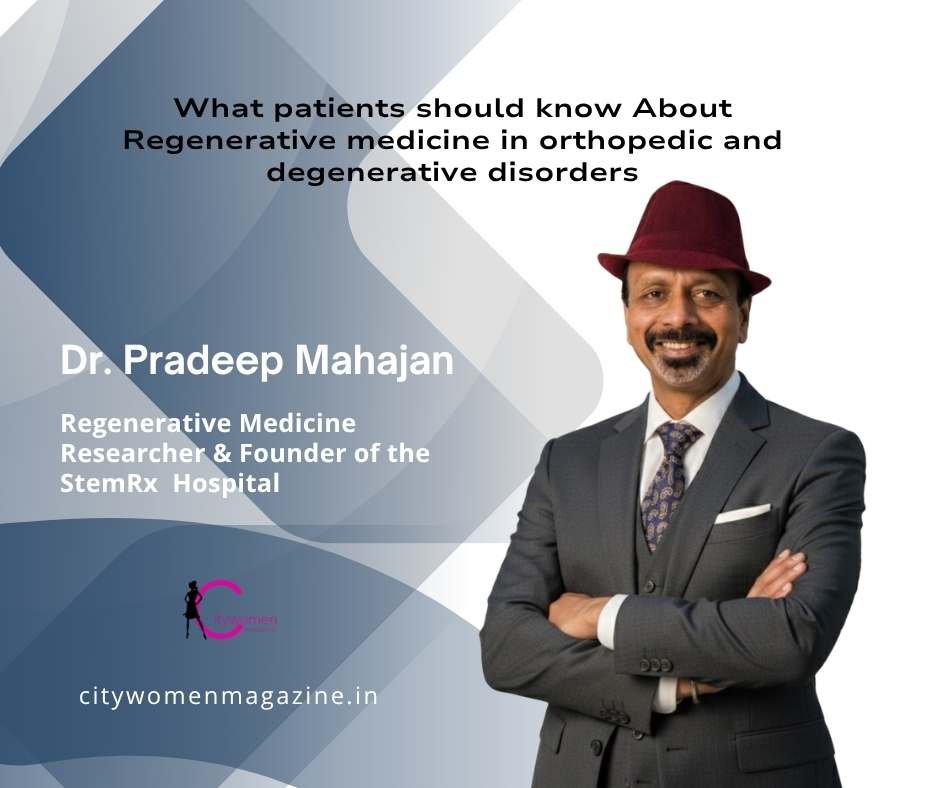
In the words of Dr. Pradeep Mahajan, a specialist in Regenerative Medicine, “Regenerative medicine isn’t about quick results; it’s about restoring the body’s inherent capacity to heal, repair, and regain function over time.”
The right choice of patients and a comprehensive approach are ways to achieve meaningful outcomes.”
To conclude, regenerative medicine provides hope for people suffering from chronic orthopedic and degenerative disorders. It aims to heal and not just manage symptoms; it also improves quality of life. Moreover, informed decision-making, realistic expectations, and proper medical guidance are essential for achieving the best possible outcomes.
