






Jawline Pimples Before Periods? The Hormone–Skin Connection
Causes, Myths & Permanent Solutions
inputs by Founder and Chief Dermatologist Dr. Akriti Gupta from Jivisha Clinic, Gujrawalan Town and Yamuna Vihar New Delhi

One of the most common lines I hear in my clinic is: “Doctor, I never had pimples as a teenager — why am I getting them now?”
Adult acne, especially in women between 23 and 40, is no longer unusual. In fact, it is becoming one of the most frequent dermatology concerns today. The reason is simple — hormones.
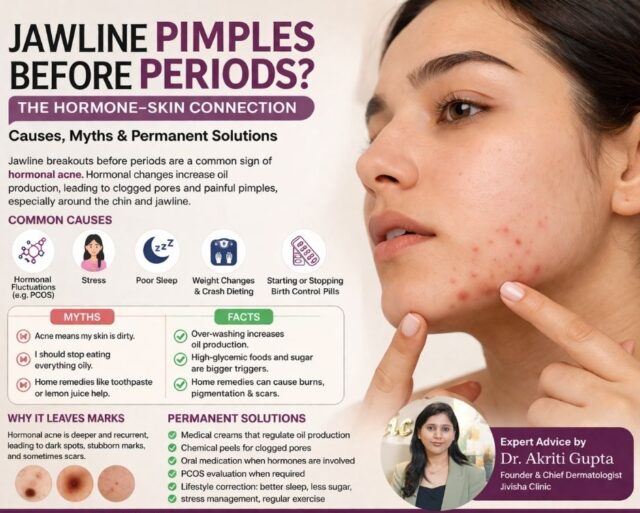
What is hormonal acne?
Hormonal acne appears when androgen hormones (male-type hormones present in women too) stimulate the oil glands of the skin. This excess oil blocks pores and allows bacteria to grow, leading to inflamed pimples.
Unlike teenage acne, hormonal acne follows a pattern. It typically occurs:
- along the jawline
- chin and lower cheeks
- neck area
- before menstrual cycles
Many women notice flare-ups about a week before periods.
“When acne comes and goes with your cycle, your skin is actually responding to internal hormonal shifts, not just external dirt or food,” I often explain to my patients.
Common causes I see in practice
Hormonal acne is rarely due to just one reason. Usually multiple triggers work together:
1. PCOS (Polycystic Ovary Syndrome)
A very common factor. Increased androgen levels lead to oilier skin and recurrent deep pimples.
2. Stress
Chronic stress raises cortisol, which indirectly increases oil production. This is why working professionals often suddenly develop acne.
3. Sleep disturbance
Late-night schedules and screen exposure affect melatonin and insulin balance, worsening breakouts.
4. Sudden weight changes or crash dieting
These disturb insulin levels and can activate acne pathways.
5. Stopping or starting oral contraceptive pills
Hormonal fluctuations during this period commonly trigger acne.
Myths patients still believe
Many women unknowingly worsen their acne because of misinformation.
Myth 1: “Acne means my skin is dirty.”
No. Over-washing actually irritates the skin barrier and increases oil production.
Myth 2: “I should stop eating everything oily.”
Oil on your plate is not equal to oil on your skin. High-glycemic foods and sugary drinks are bigger triggers.
Myth 3: “Home remedies like toothpaste or lemon juice help.”
These often cause burns, pigmentation, and delayed healing — a very common mistake I see. said Dr. Gupta “Most adult acne patients damage their skin more through self-treatment than through acne itself.”
Why it leaves marks
Hormonal acne tends to be deeper and more inflamed. Because lesions occur repeatedly in the same area, they often leave:
- dark spots (post-inflammatory pigmentation)
- stubborn marks
- sometimes scars
This is why early treatment matters.
Permanent solutions — what actually works
Hormonal acne cannot be controlled by facewash alone. Treatment must address both skin and internal triggers.
Depending on the case, I usually recommend:
- medical creams that regulate oil production
- chemical peels for clogged pores
- oral medication when hormones are strongly involved
- evaluation for PCOS when required
Lifestyle correction is equally important:
- consistent sleep schedule
- reducing sugary snacks and sweetened beverages
- stress management and exercise
Acne treatment is not about drying the pimple; it is about calming the oil gland.
Hormonal acne is frustrating but very treatable. The biggest mistake is waiting too long or repeatedly changing products based on online advice.
“Acne is not a cosmetic problem — it is a medical condition. Once we correct the internal imbalance and protect the skin barrier, the skin gradually heals and confidence returns with it”concluded Dr. Akriti Gupta.