

The Common Parenting Habit
Every parent wants their child to do well — to succeed in school, sports, and life. In this pursuit, many parents unintentionally compare their children to others. It might sound like, “Look how well your cousin studies,” or “Your friend is so good at sports.”
While these comparisons may seem harmless or even motivating, they often have the opposite effect. Instead of inspiring improvement, they can create feelings of inadequacy, anxiety, and low self-worth.
Why Parents Compare
Comparison often comes from love and concern. Parents want their children to reach their potential and believe that pointing out others’ achievements will encourage them to do better.
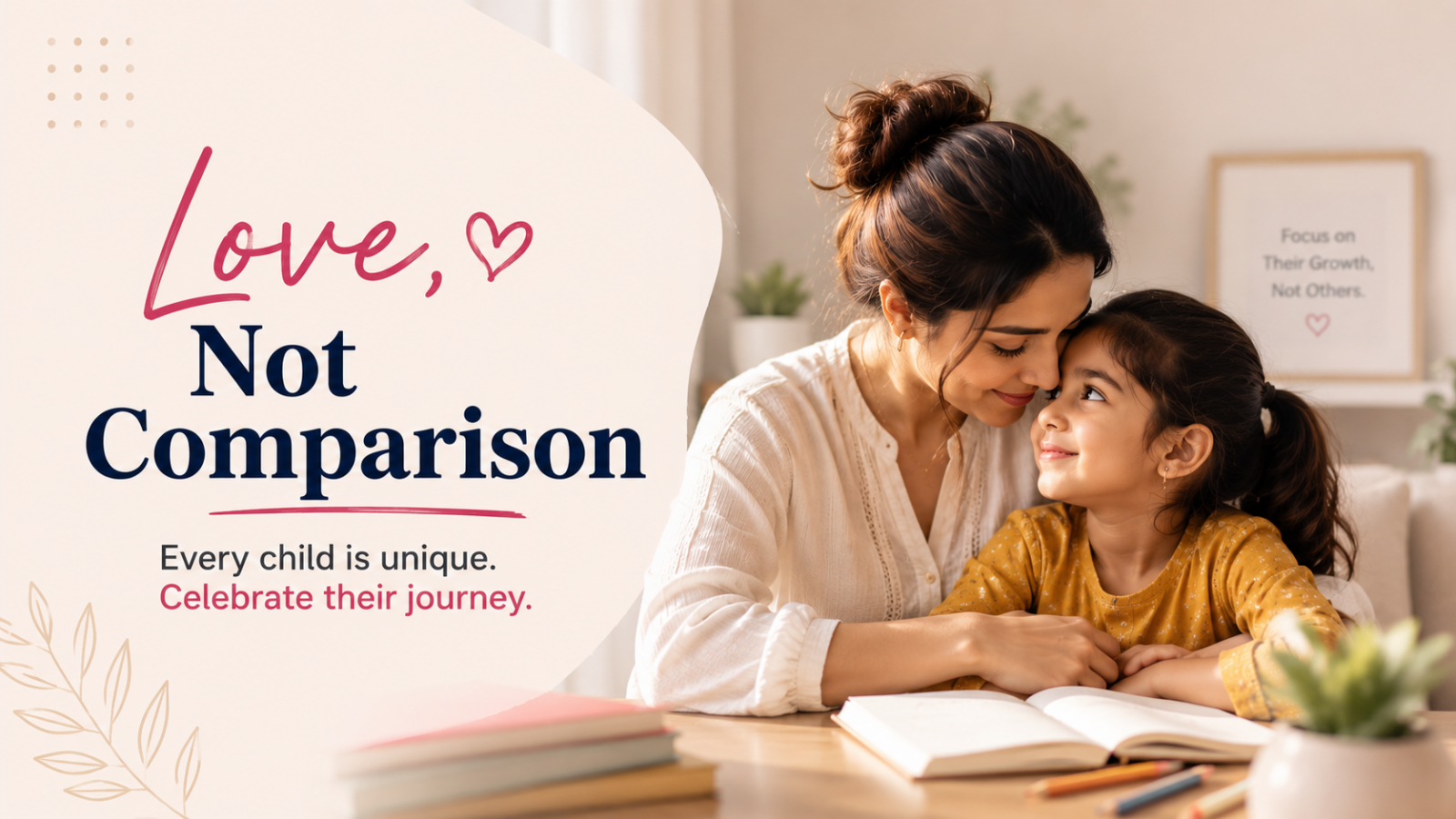
However, every child is unique — with different strengths, learning styles, and timelines. When children are constantly compared, they stop seeing their individuality as valuable and start believing they are not “enough.”
The Hidden Impact on Confidence
1. Creates Self-Doubt
When children hear comparisons, they begin to question their abilities. They may think, “I’ll never be as good as them,” or “No matter what I do, it’s not enough.”
2. Reduces Motivation
Instead of motivating, comparison often discourages. Children may feel that their efforts don’t matter because someone else will always be better.
3. Damages Parent-Child Trust
When children feel constantly judged, they may withdraw emotionally. They might stop sharing their struggles or achievements, fearing criticism or comparison.
4. Encourages Unhealthy Competition
Comparison teaches children to measure their worth against others rather than focusing on personal growth.
5. Impacts Emotional Health
Children who grow up being compared often experience anxiety, perfectionism, or fear of failure.
How to Encourage Without Comparing
1. Focus on Effort, Not Outcome
Praise hard work, persistence, and improvement rather than results.
2. Set Personal Goals
Help children set goals based on their own progress, not others’.
3. Celebrate Small Wins
Every achievement, no matter how small, deserves recognition.
4. Be a Role Model
Avoid comparing yourself to others in front of them.
5. Encourage Strengths and Interests
Support what your child loves — whether it’s art, science, or sports.
Celebrate individuality. Encourage effort. Believe in your child — and they will learn to believe in themselves.
