

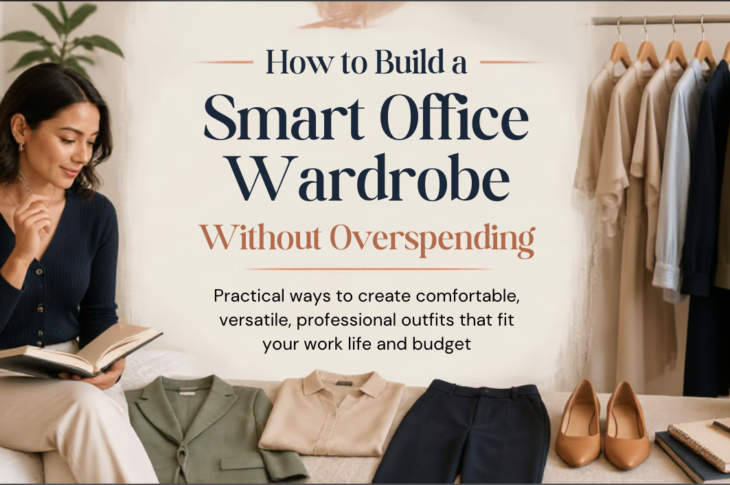
Standing in front of a full closet before work and still feeling that you have nothing suitable to wear is a familiar kind of morning stress. You are trying to balance professionalism with comfort, weather, commuting, dress codes, body changes, laundry time, budget, and personal style—all before the workday has even begun.
A smart office wardrobe is not about owning many clothes or copying every trend. It is about building a flexible set of pieces that work together, fit your real life, and reduce daily decision fatigue without encouraging overconsumption.
|
Smart means intentional, not expensive. The right wardrobe is comfortable, repeatable, polished enough for its setting, easy to maintain, and aligned with your identity. Professional style does not require uncomfortable shoes, tight tailoring, makeup, heels, dry-clean-only pieces, or a particular body shape. |
What a smart office wardrobe really means
Think of your work wardrobe as a practical system rather than a perfect collection. Each piece should support the way you actually move through your days, whether that means sitting at a desk, travelling between sites, joining video meetings, welcoming customers, leading a team, or working from home before heading to an occasional appointment.
- Intentional: You choose pieces because they serve your work, comfort, climate, and identity—not because an advertisement says you need them.
- Flexible: Items can be combined across casual, business casual, formal, creative, customer-facing, field-based, uniformed, hybrid, and remote settings where appropriate.
- Repeatable: You can wear trusted combinations again without feeling that repetition is a failure.
- Inclusive: The wardrobe adapts to different ages, sizes, skin tones, cultures, religions, modesty choices, mobility needs, sensory preferences, pregnancies, postpartum recovery, menopause, and changing bodies.
Start with your actual work life and dress code
Office dress codes vary by industry, workplace, culture, location, safety requirements, client expectations, and role. Observe what people in comparable positions actually wear, read any written guidance, and ask for clarification when needed. A creative studio, laboratory, school, healthcare setting, construction site, law office, and home office may all require different solutions.
Your wardrobe may need to support employees, freelancers, entrepreneurs, hybrid workers, remote workers who attend occasional meetings, interns, managers, women returning to work, or women changing careers. It may also need to work around a uniform, protective clothing, religious dress, pregnancy, postpartum recovery, disability, temperature sensitivity, or limited laundry access. Use the ideas in this article as adaptable starting points, not instructions to ignore safety or workplace expectations.
The wardrobe foundation: versatile categories, not a rigid capsule formula
Instead of prescribing an exact number of items, begin with categories that solve your most common workday needs. A smaller wardrobe can be highly functional when the pieces coordinate, feel good, and match your maintenance capacity.
|
Category |
Useful options |
Adapt as needed |
|
Bottoms |
A comfortable pair of work-appropriate trousers or another preferred bottom |
Skirt, dress, jeans, or culturally appropriate alternative where the dress code allows |
|
Layers |
A structured but comfortable blazer, cardigan, overshirt, jacket, or vest |
Choose warmth, coverage, mobility, and sensory comfort for the setting |
|
Tops |
Simple tops or shirts that coordinate with existing pieces |
Use breathable fabrics, modest necklines, or accessible closures when helpful |
|
Shoes and outerwear |
Comfortable shoes suited to commuting and the workplace, plus one weather-appropriate outer layer |
Consider support, climate, walking distance, safety, and uniform requirements |
|
Carrying and expression |
A work bag or practical carry option, with accessories that express personal style |
Use scarves, jewellery, belts, or other details instead of buying a complete outfit |
Substitute freely based on climate, dress code, religion, culture, mobility, sensory preferences, uniform requirements, pregnancy, postpartum needs, and budget. A long tunic, wide-leg trouser, head covering, adaptive garment, soft cardigan, or practical backpack can be just as intentional as a conventional office staple.
How to choose colours and silhouettes that mix easily
Begin with colours you already wear and like. Choose a small group of coordinating neutrals and one or two personal accent colours if that makes dressing easier, but there is no universal palette you must follow. Texture, pattern, scarves, jewellery, belts, and layers can create variation without requiring new outfits.
Before buying, check whether an item works with at least three pieces you already own. This is a useful guide, not a strict test: a special occasion piece or meaningful statement item can still have value. Avoid buying a colour only because it is trending if it does not suit your life or make you want to wear it.
Silhouettes should reflect how you like to move and present yourself. A relaxed shirt, straight trouser, flowing dress, structured jacket, or oversized layer may all look polished when they are clean, coordinated, and appropriate to the setting.
Fit, comfort, accessibility, and tailoring
Fit should support movement, sitting, commuting, reaching, and your comfort throughout a full day. A garment can be professional without being tight or rigid. Consider pockets, closures, stretch, breathable fabrics, lining, sleeve length, hem length, waist comfort, shoe support, temperature sensitivity, and sensory needs such as scratchy seams or restrictive waistbands.
Body size and shape can change. Clothing should adapt to the person, not the reverse. Choose words such as comfortable, functional, balanced, or preferred rather than ranking bodies by whether they look “flattering.” Alterations can sometimes make an existing garment more useful, but they are optional and are not always cheaper than another solution.
Outfit formulas for different office settings
These are starting points, not rules. Adjust them for casual, business casual, formal, creative, customer-facing, field-based, uniformed, hybrid, and remote contexts.
- Preferred bottom + simple top + layer + comfortable shoes. Try trousers with a shirt and cardigan, or a culturally preferred bottom with a breathable top and overshirt. Add a blazer for a more formal meeting or a soft layer for commuting.
- Dress or long tunic + cardigan, jacket, or overshirt + practical shoes. Choose a relaxed dress for warm weather, a long tunic with trousers where appropriate, or an adaptive option that makes sitting and movement easier.
- Skirt or culturally preferred bottom + knit or shirt + structured layer. A soft knit can work for a quieter office, while a jacket or vest can add structure for a presentation or customer-facing day.
- Dark jeans or casual bottom where permitted + polished top + clean layer. This can suit a relaxed workplace, hybrid day, or creative setting when the denim or casual piece meets local expectations.
- One base outfit adapted across the week. Change the layer, scarf, jewellery, belt, shoes, or bag while keeping a comfortable foundation. Repeating a useful combination is smart wardrobe management, not a lack of creativity.
How to shop without overspending
- Audit before shopping. List genuine gaps, duplicates, worn-out pieces, and clothes that need repair.
- Define the use. Decide whether the need is for the office, commute, meetings, travel, hot weather, a cold office, or client-facing days.
- Set a total budget. Add a per-item ceiling only if it helps you make decisions without creating pressure.
- Shop in stages. Start with the most-used gap rather than buying a complete new wardrobe after beginning a job.
- Compare the whole cost. Consider fabric, care, durability, fit, return terms, and likely cost per wear without promising exact savings.
- Learn the workplace rhythm first. Observe real routines before investing in clothes for an imagined version of your role.
- Use a 48-hour pause. Wait before making a non-essential purchase and notice whether the need remains.
- Consider shared and pre-owned options. Explore secondhand clothing, swaps, borrowing for rare occasions, repairs, alterations, or renting where appropriate.
- Do not confuse cheap with good value. A poor-quality item that is uncomfortable or quickly unusable may cost more in time and resources.
- Avoid trend-driven debt. Do not use credit or debt to keep up with fashion. A slower wardrobe plan is still a stylish one.
Secondhand, repairs, alterations, swaps, and responsible care
Secondhand shopping, clothing swaps, borrowing for rare occasions, and renting can extend your options, especially when you need something for an infrequent event. Check condition, fit, care needs, and return terms where relevant, and never assume that a pre-owned item is automatically the right choice.
Wash according to garment care instructions, air garments between wears when appropriate, and store shoes, bags, knitwear, and delicate pieces thoughtfully. Repair small damage early when practical. Donate or resell responsibly rather than treating clothing as disposable, and avoid assuming that all sustainability claims are equally reliable—check the information and buy less when possible. Caring for existing clothes can be more useful than constantly replacing them.
A practical wardrobe audit
- What do I actually wear to work?
- Which pieces are comfortable for a full day?
- Which items work across more than one setting?
- Which colours or silhouettes do I reach for naturally?
- What is missing: tops, bottoms, layers, shoes, weather gear, or underlayers?
- What needs repair, alteration, cleaning, or replacement?
- What should leave the wardrobe because it does not fit my life, comfort, or workplace?
- Which items create several combinations?
- What is my actual laundry and maintenance capacity?
A realistic 30-day office wardrobe plan
- Days 1–5: Observe the dress code, work settings, climate, commute, comfort, and outfits already worn by you and others.
- Days 6–10: Audit the wardrobe and identify one or two genuine gaps rather than a long wish list.
- Days 11–15: Create several combinations from what you already own. Photograph or note them if helpful.
- Days 16–20: Repair, alter, wash, organise, or source one high-use item through a budget-conscious option.
- Days 21–25: Test outfits through real workdays and note comfort, confidence, movement, and maintenance.
- Days 26–30: Keep, return, alter, donate responsibly, swap, or pause based on evidence rather than impulse.
Adapt the plan to changing schedules, pregnancy, postpartum needs, disability, sensory needs, weather, uniforms, and limited budgets. A 30-day plan is a way to learn, not a deadline for becoming someone else.
Common mistakes to avoid
- Buying for an imaginary lifestyle instead of the work life you actually have.
- Shopping for trends before understanding the dress code.
- Buying too many statement pieces with nothing to combine them with.
- Choosing discomfort to look professional.
- Ignoring the weather, commute, accessibility, or time available for laundry.
- Buying duplicates because clothes are not visible or organised.
- Treating a capsule wardrobe as a strict rule rather than a possible planning tool.
- Comparing wardrobe budgets or bodies with influencers.
- Keeping items that cause discomfort or no longer fit your life.
- Using credit to keep up with fashion.
- Assuming professional style requires heels, makeup, a particular body, or expensive labels.
Presentation beyond clothing
Clean or well-maintained garments, appropriate grooming according to personal preference, neatness, preparation, posture, and respectful communication can all contribute to workplace presentation. None of this means that women must wear makeup, style their hair a certain way, hide natural features, or change their appearance to deserve respect. Presentation should support dignity, safety, confidence, and the expectations of the setting.
Five small actions to start this week
- Check your actual workplace dress code and schedule.
- Photograph or list five outfits you already feel comfortable wearing.
- Identify one genuine wardrobe gap.
- Build three combinations from existing pieces.
- Set a pause-and-review rule before your next non-essential purchase.
