







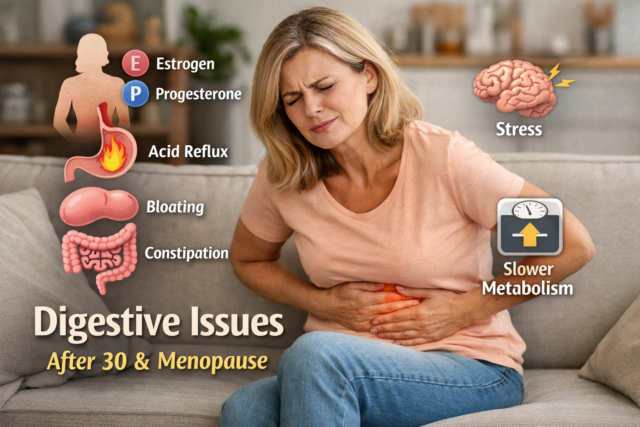
As women age, especially after 30 and more prominently after 40 and during menopause, hormonal changes significantly affect digestion. Many women start experiencing persistent acidity, bloating, constipation, gas, reflux, and abdominal discomfort, which may not have been present in their 20’s.
These issues are not “just normal acidity” — they are often connected to hormonal fluctuations, metabolism changes, stress, and lifestyle patterns.
Why Gastric Issues Increase After 30?
Hormonal Fluctuations (Estrogen & Progesterone)
- Estrogen influences gut motility and inflammation.
- Progesterone relaxes smooth muscles — including intestinal muscles.
- When progesterone rises (especially premenstrual phase), digestion slows → leading to:
- Constipation
- Bloating
- Water retention
As hormones become irregular with age, digestion becomes inconsistent.
Slower Metabolism
After 30:
- Metabolic rate gradually decreases.
- Physical activity often reduces.
- Muscle mass decreases → digestion slows.
This contributes to:
- Weight gain
- Gas formation
- Indigestion
Stress & Emotional Load
Women often carry multiple responsibilities — career, family, care-giving. Chronic stress increases:
- Cortisol
- Gut inflammation
- Acid production
This can lead to:
- Gastritis
- IBS (Irritable Bowel Syndrome)
- Acid reflux
Tummy issue
This is partially because as we grow older, our stomach produce less acid. Without acid’s protection, hard-on-the-stomach medications, may become harder to bear.
And just as the muscles throughout your body might tire more easily than they did in your 20’s and 30’s, the muscles in your gastrointestinal tract, including the esophagus and bowel, can slow down. This often leads to increased symptoms, such as acid reflux or constipation, respectively, over age 65
Menopause and Gastric Issues
During perimenopause (when periods stop for 12 consecutive months) and menopause (usually 45–55 years), estrogen levels drop significantly.
During menopause:
- Estrogen decline reduces collagen support in GI tissues.
- Pelvic floor muscles weaken.
- Transit time in colon increases.
- Increased visceral sensitivity occurs.
Hot flashes and stress further exacerbate GI symptoms.
Effects on the Digestive System:
Increased Acidity &GERD (Gastroesophageal Reflux Disease)
Lower estrogen affects the lower esophageal sphincter → more acid reflux.
Bloating & Gas
Hormonal imbalance slows gut movement.
Constipation
Reduced gut motility and dehydration are common.
Gut Microbiome Changes
Estrogen helps maintain healthy gut bacteria. When it decreases:
- Gut flora imbalance occurs.
- More inflammation.
- Food sensitivities increase.
Constipation
Our digestive system moves food through our bodies through a series of muscle contractions. As we age, this process can slow down.
When that happens, more water from the food is absorbed into the body, which can lead to constipation. Staying hydrated is very important to help prevent constipation. Inactivity can also contribute to constipation, so remember to get at least 30 minutes of moderate physical activity four days a week.
Reduced gut motility and dehydration are common.
Consequences of Ignoring Gastric Issues
If not managed properly, chronic gastric problems can lead to:
Chronic Gastritis
Persistent inflammation of stomach lining.
Ulcers
Due to excessive acid production
Nutrient Deficiencies
Poor absorption of:
- Iron (→ anemia)
- Vitamin B 12
- Calcium
- Magnesium
This increases:
- Fatigue
- Hair fall
- Weak bones (osteoporosis risk increases after menopause)
Weight Gain
Sluggish digestion leads to fat accumulation, especially abdominal fat.
Mood Disorders
Gut is connected to brain (Gut-Brain Axis).
Digestive imbalance can cause:
- Anxiety
- Irritability
- Low mood
Increased Risk of Metabolic Disorders
Chronic inflammation may contribute to:
- Insulin resistance
- Type 2 diabetes
- Cardiovascular risk
Common Symptoms Women Report
- Persistent bloating
- Heaviness after meals
- Acid reflux at night
- Burping frequently
- Constipation for several days
- Abdominal cramps
- Food intolerance (dairy, spicy food, fried food)
How to Deal with Gastric Issues After 30 & During Menopause
Improve Diet Pattern
Eat smaller, frequent meals
Increase fiber (vegetables, fruits, whole grains)
Include probiotics (curd, buttermilk)
Drink 2–3 liters water daily
Avoid late-night heavy meals
Avoid:
- Excess tea/coffee
- Spicy fried foods
- Processed food
- Carbonated drinks
Exercise Regularly
At least 30 minutes daily:
- Walking
- Yoga (Pavanmuktasana, Vajrasana, Bhujangasana)
- Light strength training
Exercise improves gut motility.
Stress Management
- Meditation
- Deep breathing
- Journaling
- Proper sleep (7–8 hours)
Reducing cortisol improves digestion.
Medical Evaluation (If Persistent)
Consult doctor if:
- Severe abdominal pain
- Blood in stool
- Sudden weight loss
- Severe reflux not improving
- Severe anemia
- Persistent vomiting
Tests may include:
- Endoscopy
- pylori test
- Thyroid test
- Vitamin levels
Menopause-Specific Care
- Phytoestrogens foods include (soy products, flaxseeds)
- Calcium & Vitamin D
- Hormone therapy (if advised by doctor)
- Gut-friendly supplements
- Gastric issues in women after 30 and particularly during menopause are multifactorial and strongly influenced by hormonal fluctuations, microbiome changes, metabolic shifts, and psychosocial stressors. Research demonstrates that declining estrogen and progesterone levels significantly affect gut motility, mucosal integrity, and inflammatory pathways.
- Untreated chronic gastric dysfunction may lead to nutritional deficiencies, metabolic disorders, psychological distress, and reduced quality of life. However, evidence-based interventions—including dietary modification, physical activity, stress management, and appropriate medical evaluation—can significantly improve outcomes.
- A multidisciplinary, hormone-aware, and gut-focused approach is essential for optimal digestive health in aging women.