

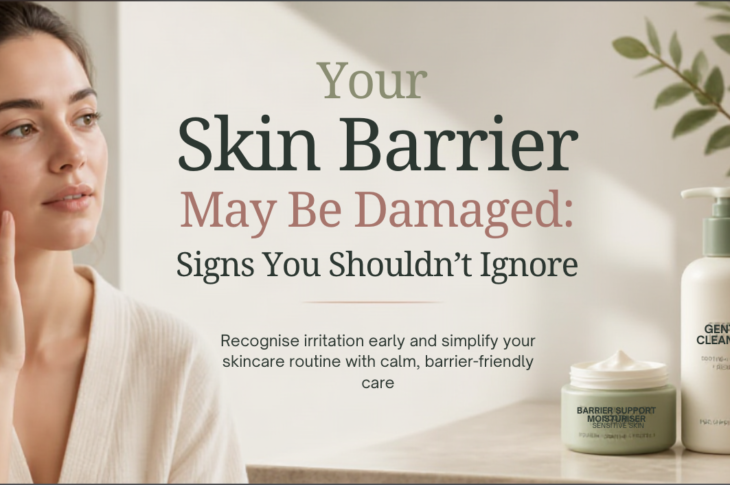
Skincare can feel confusing when a product you have used for months suddenly stings, your face feels tight after cleansing, or your usual routine stops behaving as expected. You may notice dryness in places that were never dry before, small bumps, redness, or a burning sensation after applying a familiar moisturiser.
These changes can be unsettling, but they do not automatically mean you have done permanent damage. Skin can become temporarily more reactive for many reasons, and a calmer routine often helps restore comfort. Here is how to recognise the signs, rethink common habits, and know when to seek professional advice.
What is the skin barrier?
The skin barrier is the outer protective layer of your skin. In simple terms, it helps hold on to moisture while shielding the skin from irritants, allergens, pollution, weather changes, and other environmental stressors.
When this protective function is not working comfortably, people often use the phrase “damaged skin barrier.” It is common skincare language, not a diagnosis by itself. Similar symptoms can come from dryness, irritation, an allergy, eczema, rosacea, another skin condition, or a combination of factors.
Think of your barrier as part of your skin’s everyday defence system, not a separate organ. Its comfort can change with your cleansing habits, the products you use, the weather, stress, illness, and your own skin’s tolerance.
|
Key takeaway: A reactive face is a reason to simplify and observe, not a reason to panic or add more products. The goal is comfortable, supported skin rather than a perfect complexion overnight. |
Signs your skin may be asking for a reset
No single symptom proves that your skin barrier is damaged. However, a cluster of new or persistent changes can be a useful signal to step back and review your routine.
|
What you notice |
How it may feel or look |
What to remember |
|
Persistent tightness or dryness |
Skin feels stretched, thirsty, or uncomfortable during the day. |
Dryness can also be linked to weather, cleansing, or an underlying condition. |
|
Flaking or rough texture |
Makeup catches on uneven patches or the surface feels less smooth. |
Aggressive exfoliation can make roughness more noticeable. |
|
Redness, itching, or sensitivity |
Skin looks flushed or reacts more easily than usual. |
These signs may have several causes and should not be self-diagnosed. |
|
Stinging or burning |
Normally tolerated products suddenly feel sharp, hot, or uncomfortable. |
Pause potential irritants instead of pushing through the sensation. |
|
Small bumps or sudden breakouts |
Your skin develops congestion or spots that are unusual for you. |
Breakouts can have many triggers, including products, hormones, stress, or illness. |
|
Discomfort after cleansing |
The face feels squeaky, hot, tight, or immediately dry. |
Very hot water or a harsh cleanser may be contributing. |
You may also notice that your skin feels unusually fragile after shaving, exercise, wind, or wearing makeup. Increased sensitivity can be especially noticeable when several changes happen together, such as starting a retinoid while also exfoliating more often.
Possible contributors include over-cleansing, hot water, harsh scrubs, frequent exfoliation, too many active ingredients, retinoids or acids used too aggressively, fragrance or other irritants, weather changes, stress, and illness. Eczema, rosacea, psoriasis, allergies, and other skin conditions can look similar, so symptoms that persist or worsen deserve individual assessment.
Common habits that can increase irritation
Many skincare habits are not automatically bad. The problem is often the combination, frequency, strength, or timing. A routine that feels fine in one season may become uncomfortable in cold weather, during illness, or after adding a new active ingredient.
- Washing too often or using very hot water can leave skin feeling stripped and tight.
- Scrubbing, brushing, or peeling aggressively can create more friction than your skin can comfortably handle.
- Starting several new products at once makes it difficult to identify what is causing a reaction.
- Combining exfoliating acids, retinoids, benzoyl peroxide, or other actives without guidance can increase irritation for some people.
- Skipping moisturiser because your skin feels oily can leave oily or acne-prone skin uncomfortable and dehydrated-feeling.
- Using fragrance-heavy or irritating products while your skin is already reactive may make symptoms harder to settle.
- Copying a viral routine without considering your skin type, climate, or personal tolerance can turn a popular idea into an unsuitable one.A simple barrier-friendly routine
For the next several days, focus on comfort rather than trying to correct every concern at once. Pause non-essential active ingredients and exfoliation. Cleanse gently, or rinse with lukewarm water according to what your skin needs and what feels comfortable.
Apply a simple fragrance-free or low-irritant moisturiser. During the daytime, use a broad-spectrum sunscreen according to the product directions. Reapply after extended outdoor exposure, sweating, or wiping as appropriate. Avoid picking, rubbing, facial brushes, and tight or rough materials that create unnecessary friction.
Do not use lemon, baking soda, toothpaste, undiluted essential oils, or harsh DIY mixtures on irritated skin. These ingredients can be unpredictable and may add more irritation rather than solving the original problem.
What to pause and what to keep
When skin feels uncomfortable, pause anything that is non-essential or feels irritating. This may include exfoliating acids, scrubs, peeling products, strong retinoids, fragranced formulas, new masks, and tools that brush or rub the skin. You do not need to remove every product automatically; focus on recent additions and anything that causes stinging or burning.
Keep the basics that your skin tolerates well: gentle cleansing or a lukewarm-water rinse, a straightforward moisturiser, and daytime sun protection. If a sunscreen stings, do not force yourself to continue using that particular formula on irritated skin; ask a qualified professional or pharmacist about suitable alternatives, especially if sun exposure is unavoidable.
|
Comfort first: Oily or acne-prone skin still benefits from barrier-supportive hydration. Choose a texture that feels comfortable rather than assuming moisturiser is only for dry skin. |
How to reintroduce active ingredients carefully
Once your skin feels comfortable again, bring products back slowly. Reintroduce one product at a time so you can notice how your skin responds. Start with less frequent use than your previous routine if the product is known to be strong, and avoid layering several potentially irritating actives on the same night.
Patch test new products according to the manufacturer’s directions and observe the area before applying the product more widely. A small-area test cannot guarantee that a product will suit your entire face, but it can provide useful information. Keep the rest of your routine steady while testing one change.
If redness, burning, itching, swelling, or a rash returns, stop the newest product and seek professional guidance when needed. Do not use steroid creams, prescription medicines, supplements, or antibiotics without advice from a qualified healthcare professional.
Skin-type considerations
There is no single reset routine that works for everyone. Skin type, climate, age, medical history, and product tolerance all matter. Use these as flexible starting points rather than rigid rules.
- Dry skin: A gentle cleanser, lukewarm water, and a richer moisturiser may feel more comfortable. Apply moisturiser when skin is slightly damp if that suits you, and reduce unnecessary cleansing.
- Oily or acne-prone skin: Choose lightweight, non-greasy hydration if preferred, but do not assume oiliness means your skin does not need moisture. Avoid responding to every breakout with more scrubbing or more actives.
- Combination skin: You may prefer different textures on different areas, but keep the overall routine gentle. Treat dry and oily zones according to comfort rather than applying the strongest product everywhere.
- Sensitive skin: Fewer products, fragrance-free options, and gradual changes may make it easier to identify what your skin tolerates. A dermatologist can help if reactions are frequent or difficult to explain.When redness, itching, or pain requires a dermatologist
Arrange an appointment with a qualified dermatologist or doctor if redness, itching, pain, swelling, rash, oozing, severe burning, or persistent acne does not settle, keeps returning, or is getting worse. You should also seek assessment for widespread rash, signs of infection, facial swelling, a sudden reaction, or symptoms that feel severe or unusual for you.
People with eczema, rosacea, psoriasis, allergies, or another known skin condition may need personalised guidance rather than a general online routine. A professional can help distinguish irritation from allergy or an underlying condition and recommend an appropriate plan.
Seek urgent medical care for breathing difficulty or severe swelling, particularly if these symptoms appear suddenly after using a product or eating something new.
A practical checklist for today
- Notice when the discomfort started and whether you recently changed a product, cleanser, tool, or frequency.
- Pause non-essential actives, exfoliation, scrubs, and anything that stings or burns.Cleanse gently with lukewarm water, adjusting the frequency to what your skin comfortably needs.
- Apply a simple fragrance-free or low-irritant moisturiser that you already tolerate.
- Use broad-spectrum sunscreen during the day according to the product directions, with appropriate reapplication after outdoor exposure, sweating, or wiping.
- Avoid picking, rubbing, facial brushes, harsh DIY mixtures, and unnecessary friction.
- Make only one routine change at a time and patch test new products as directed.
- Contact a dermatologist or doctor if symptoms persist, worsen, spread, or become severe.
A reassuring, realistic conclusion
Your skin does not have to look perfect to be healthy, and a difficult skincare week does not mean you have ruined it. Tightness, dryness, flaking, redness, stinging, itching, bumps, and post-cleansing discomfort are signals to slow down and observe, not proof of one specific diagnosis.
Keep the routine simple, protect your skin from the sun, and reintroduce products gradually when comfort improves. If the problem continues or feels severe, professional advice is the most practical next step. Your skin’s needs can change, and a routine that respects those changes is more useful than following a trend that was never designed for you.
