








When children paint, dance, sing, or build something with their hands, it may look like simple play. But inside their brains, something extraordinary is happening. Art is not just creative expression — it actively supports brain development, emotional balance, and long-term happiness.
What Happens in a Child’s Brain During Art?
Whenever a child engages in creative activities, the brain releases important chemicals that support both learning and emotional wellbeing. Dopamine, often called the “reward chemical,” increases when children create something they enjoy. This helps improve motivation, focus, and the desire to keep learning. At the same time, serotonin levels rise, which supports mood stability and helps children feel calm and emotionally balanced.
Creative activities also trigger endorphins, the body’s natural stress relievers. These chemicals reduce anxiety and create a sense of joy and relaxation. When art is done in groups — such as music classes, dance groups, or collaborative projects — the brain may release oxytocin, a bonding hormone that helps children feel connected, safe, and socially confident. Together, these chemical reactions strengthen neural pathways in areas related to memory, emotional control, communication, and problem-solving. In simple words, art helps build a stronger, happier brain.
Art and Brain Development at Different Ages
Toddlers (1–3 years): Sensory and Motor Growth
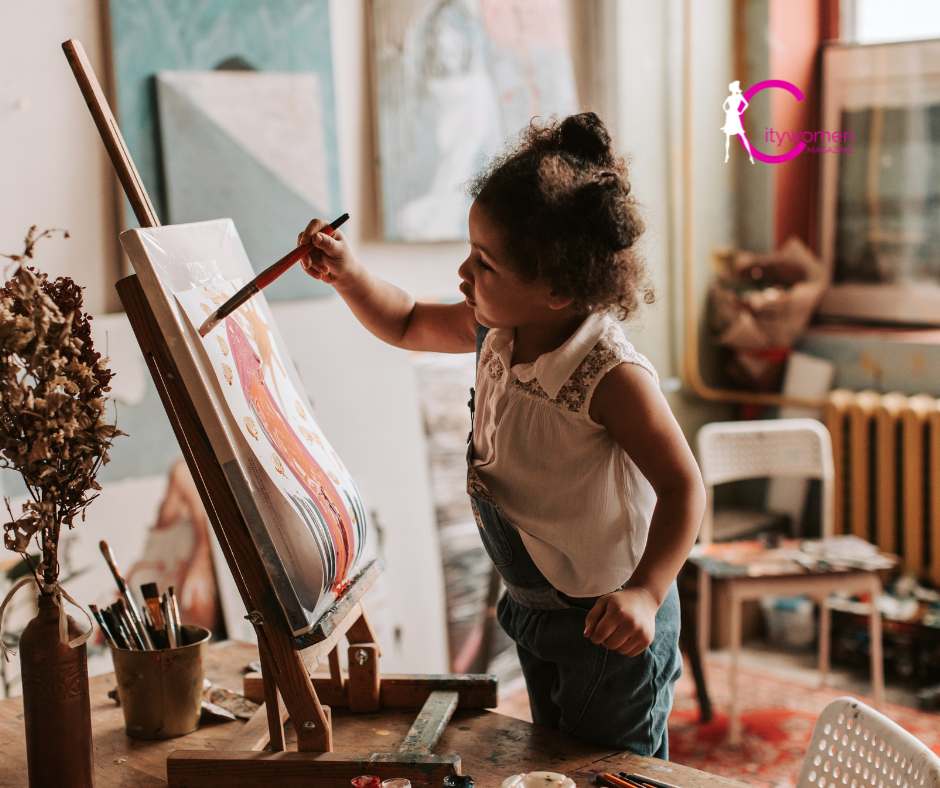
In the toddler years, children learn about the world through touch, sound, movement, and sight. Activities like scribbling with crayons, finger painting, playing with clay, or listening to music stimulate their senses and help the brain build connections related to movement and coordination. These activities strengthen fine motor skills, improve hand–eye coordination, and support sensory processing. Since toddlers often cannot express feelings clearly with words, art also becomes one of their earliest ways to show emotions.
Early Childhood (4–7 years): Language and Emotional Skills

As children grow, art starts supporting communication and emotional understanding. Drawing pictures, singing rhymes, storytelling through play, and dancing all help develop vocabulary and narrative skills. Children begin to express their thoughts and feelings through creative work, which improves emotional awareness. Role-play and dramatic activities also help them understand other people’s feelings, building empathy and social understanding. During this stage, art becomes a bridge between emotions and language.
Middle Childhood (8–12 years): Confidence and Thinking Skills

Between the ages of eight and twelve, children develop stronger thinking abilities and a growing sense of identity. Creative activities during this stage encourage problem-solving and flexible thinking, as children make choices about colors, patterns, rhythms, or storylines. Art projects also teach patience and concentration, especially in activities like music practice, theatre rehearsals, or detailed crafts. Successfully completing creative work builds confidence and self-esteem, helping children feel capable and proud of their efforts.
Teens (13+): Identity and Emotional Regulation

For teenagers, art becomes more than play — it becomes a powerful emotional outlet. Adolescence often brings stress, social pressure, and emotional ups and downs. Creative expression through music, journaling, dance, photography, or digital art gives teens a safe way to process these feelings. Art helps them explore their identity, understand their emotions, and release stress in healthy ways. It can reduce emotional shutdown and encourage self-reflection and resilience during a time of major change.
Art and Happiness: The Emotional Superpower
Children who regularly participate in creative activities often show lower stress levels and better emotional control. Because art provides a safe outlet for big feelings, children are less likely to bottle emotions up. Creative expression also builds resilience by helping kids cope with frustration and mistakes in a healthy way. Over time, this strengthens confidence and nurtures a general sense of joy and satisfaction in daily life. Art doesn’t just entertain children — it supports long-term emotional wellbeing.
How Parents Can Encourage Art (Without Pressure)
 Supporting a child’s creativity doesn’t require expensive classes or professional training. What matters most is giving children freedom to explore without fear of judgment. Keeping simple art supplies like paper, crayons, or craft materials within easy reach encourages spontaneous creativity. Playing music at home and allowing children to move freely also supports expression through dance and rhythm.
It’s important for parents to praise effort rather than focusing only on the final result. When adults avoid correcting or criticizing creative work, children feel safer expressing themselves. Joining children in art activities from time to time can also strengthen emotional bonding. The goal is not to raise a perfect artist — it is to raise a confident, emotionally healthy, and creative human being.
Art is not an “extra” activity in childhood — it is brain nourishment, emotional support, and happiness training wrapped in fun. Every drawing, song, dance step, or craft project helps shape a child’s developing brain and emotional world.
So the next time your child makes a colorful mess or sings loudly around the house, take a moment to smile. Their brain is growing, their emotions are learning to flow, and their happiness is quietly being built.