

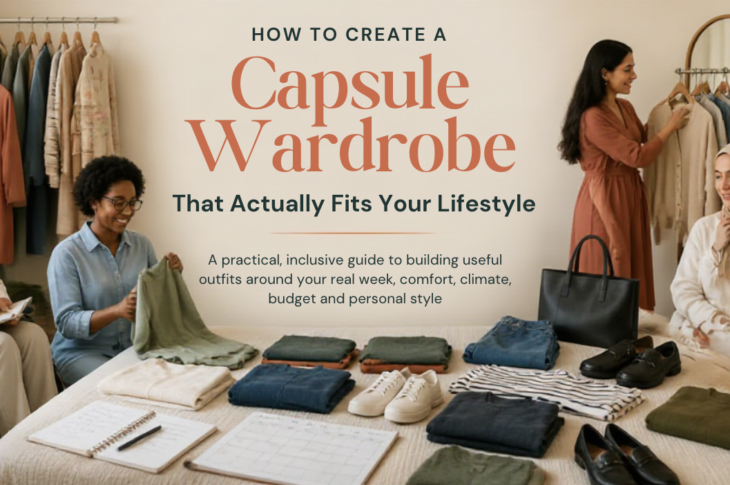
What a capsule wardrobe really is
You are standing in front of a full wardrobe, late for work, with clothes spilling from hangers and drawers. You still feel like you have “nothing to wear.” Your week includes commuting, home responsibilities, errands, social plans, weather changes, perhaps a religious or cultural occasion, caregiving, exercise or sensory needs. Meanwhile, the items that looked perfect online do not work with your real routine.
A capsule wardrobe is not a fixed number of garments, an expensive aesthetic or a strict minimalist challenge. It is a practical, flexible selection of clothes that work together for your actual life, body, climate, budget, identity and access needs. The goal is fewer decisions and more useful outfits—not deprivation or conformity.
|
Keep this in mind: Your capsule can include colour, prints, occasionwear, cultural clothing, statement pieces, adaptive garments, uniforms, activewear and sentimental items. A small core can sit alongside seasonal and special-purpose pieces. |
Why a full closet can still feel impractical
The problem is often not too many clothes. It is a mismatch between your wardrobe and your life. You may own plenty of one-off pieces but lack comfortable layers for commuting, easy-care clothes for frequent washing, coverage for cultural dress, supportive footwear, or outfits that work when your body, schedule or energy changes.
Online styling can also sell an imaginary lifestyle: a polished office, mild weather, unlimited time and no mobility, sensory or care considerations. A useful wardrobe begins elsewhere. It starts with the activities, constraints and pleasures that shape your real week.
Start with your real week, not an imaginary lifestyle
Map a normal two-week period before making a shopping list. Note work, commute, home, errands, exercise, social plans, formal events, caregiving, travel, rest and weather needs. Estimate how often each activity occurs without forcing it into a universal percentage formula.
- Note dress codes, climate, laundry frequency, storage, footwear, mobility, sensory preferences and layering needs.
- Identify clothes you already repeat and write down why they work.
- Record friction points: itchy fabrics, difficult fastenings, painful shoes, poor pockets, inadequate coverage or special-care items.
- Choose three style words—perhaps relaxed, colourful and structured, or modest, soft and practical. Treat them as prompts, not rules.
Audit your current wardrobe without shame
Take one category at a time rather than emptying every drawer. Sort clothes into six groups:
- Wear often — reliable pieces you reach for repeatedly.
- Wear sometimes — useful for certain days, seasons or moods.
- Needs repair or alteration — items worth fixing if you still want them.
- Needs a different context — occasionwear, cultural clothing, travel gear or specialist workwear.
- Unsure — pieces that need a trial box or holding period.
- Ready to release — items you no longer want, can safely pass on or cannot use.
Ask: Does this fit my body now? Is it comfortable? Does it suit my current life? Can I care for it? Do I feel like myself in it? Is it safe and accessible to wear? A garment that no longer fits is not evidence of personal failure. Bodies and circumstances change through pregnancy, postpartum life, menopause, illness, medication changes and ordinary fluctuation.
Keep expressive, meaningful, culturally important and occasion-specific pieces even when they do not match a core palette. If you are uncertain, place an item in a labelled box and revisit it later. Donation, resale or release does not need to happen on the same day as your audit.
Build outfit formulas before buying anything
A formula is a repeatable structure, not a uniform. Try trousers with a comfortable top, layer and supportive shoe; a skirt or wide-leg trouser with a knit and jacket; a dress with a cardigan and practical shoe; a tunic or long shirt with trousers and a layer; an adaptive base with an easy-fastening layer; or a work uniform with accessories that express your style.
For hot weather, consider breathable bases, loose layers and sun coverage. For cold days, build around warm base layers, insulating mid-layers and weather-ready outerwear. For wet weather, prioritise a protective shell and shoes that suit walking. Transitional days may need a removable cardigan, vest, scarf or light jacket. Add jewellery, scarves, bags, belts, hats or colour accents only if you enjoy and use them.
Choose footwear for walking, work safety, orthotics, weather, mobility and support—not appearance alone. A stylish outfit is still unsuccessful if the shoes make the day painful or unsafe.
Choose a flexible colour and texture story
Choose a base palette only if it makes dressing easier. It might be black, navy, brown, cream, grey, denim, bright colour or a mix. Add two or three supporting colours, plus prints or textures you genuinely enjoy. A cohesive wardrobe does not need to be beige, quiet or trend-led; your palette should feel like you.
Decide what belongs in your core wardrobe
Think in functions rather than numbers. Your core may include:
- Lower-body options that suit your work, movement and preferred silhouettes.
- Comfortable tops and base layers in fabrics and cuts you can tolerate and enjoy.
- Layers for temperature changes, coverage and dress-code shifts.
- Special outfits for formal, cultural, religious or other occasions you actually attend.
- Practical footwear, underlayers, sleepwear and activewear according to your needs.
- Expressive pieces that keep the wardrobe personal rather than generic.
The right quantity depends on laundry access, climate, work frequency, storage, budget and preference. Uniforms, shift work, remote work, outdoor work, travel and caregiving all create different requirements.
Include comfort, access and body changes
Fit is about support, movement and preference—not hiding or correcting a body. Tailoring, elastic waists, magnetic or easy fasteners, seated dressing, low-friction fabrics, tagless options, adaptive clothing, flat shoes and accessible storage can help when wanted. For modest or religious dress, consider coverage, opacity, head coverings, layering and climate respectfully, without treating them as limitations.
For gender expression, choose silhouettes and combinations based on identity, comfort and preference rather than gendered rules. Pregnancy, postpartum changes, menopause and illness may call for flexible pieces or a temporary plan; you do not need to replace everything at once. A fluctuating body deserves clothes that support it now.
Shop strategically and avoid duplicate purchases
Before buying, name the exact outfit, activity and existing pieces the item will support. The optional “three-outfit test” can help: does it work with three things you own, or fill a clearly defined need? It is a prompt, not a strict rule.
Check fit, movement, comfort, transparency, care instructions, pockets, closures, layering, climate and return policy. Do not buy an uncomfortable item because it is trendy, discounted or labelled a wardrobe essential. Shop your own wardrobe first; an aspirational identity is not the same as a genuine gap.
Make a capsule wardrobe work across seasons
Keep a stable core and rotate supporting pieces as the weather changes. A breathable shirt can work alone in heat, under knitwear in cold and beneath a jacket in a transitional season. The same trousers may need different tops, socks, outerwear and footwear across the year.
Do not store away every item that is not currently perfect for the season. Leave accessible the pieces that support layering, sudden weather changes, travel or your actual laundry rhythm. Seasonal, cultural, formal and specialist mini-sections are part of a flexible system.
Care, repair, resale and sustainable choices
Clothing care, repair, resale, swapping, tailoring, borrowing and second-hand shopping can extend use, but access depends on time, safety, fit, money and local availability. Cost per use can be a reflection tool, not a moral score: an inexpensive item worn often may be valuable, while an expensive uncomfortable item may not be.
Follow care instructions, wash less when appropriate, air-dry when suitable and repair small damage early. These choices can help you use clothes longer, but a capsule wardrobe does not automatically reduce environmental impact if it leads you to replace usable clothes or buy unnecessary “basics.”
Common mistakes and better alternatives
- Copying an online minimalist capsule? Map your own week instead.
- Choosing a fixed number? Choose enough for laundry, climate and activities.
- Buying only neutrals? Build a palette that feels like you.
- Removing occasionwear or cultural clothing? Keep pieces that serve real needs.
- Keeping uncomfortable “someday” clothes? Use a holding box and decide later.
- Buying basics before checking gaps? Write the missing outfit or function first.
- Treating fit changes as failure? Try alterations, flexible pieces or a temporary plan.
- Prioritising appearance over access? Treat comfort, mobility and sensory needs as design requirements.
- Decluttering everything at once? Make gradual decisions.
Do/Don’t guidance
- Don’t build for an imaginary lifestyle.
- Do build for the week you actually live.
- Don’t use a universal garment count.
- Do adjust for laundry, climate, activities and budget.
- Don’t shame your body or preferences.
- Do prioritise fit, support, comfort and self-expression.
- Don’t buy a whole new wardrobe.
- Do audit and style what you own first.
- Don’t remove every statement or sentimental item.
- Do keep meaning and joy.
- Don’t treat sustainability as perfection.
- Do extend use where possible.
- Don’t keep unsafe or restrictive clothes for fashion.
- Do treat accessibility as essential.
Troubleshooting when outfits still feel difficult
- Nothing to wear? Photograph three outfits that work and identify the repeated formula.
- Looks cohesive but boring? Add a colour, texture, print or accessory you genuinely enjoy.
- Works for one season only? Add a layer, base layer or weather-ready shoe before replacing everything.
- Inconsistent fit? Sort by current comfort, set aside alterations and stop forcing old sizes.
- Laundry is limiting? Add practical basics only where needed and choose easy-care pieces.
- Shopping never completes outfits? Pause and write three missing formulas.
- Dressing is physically difficult? Consider adaptive design, seated dressing, easier fastenings, assistance or occupational-therapy guidance where appropriate.
- Style feels unclear? Study three outfits you love: note colours, proportions, fabrics and comfort features.
- The capsule feels restrictive? Add a seasonal, occasion, cultural or expressive mini-section. Flexibility is part of the system.
A 7-day capsule wardrobe reset
Treat this as a flexible experiment, not a challenge. Pause or repeat any day.
- Day 1: Map two weeks of activities, weather and dress codes.
- Day 2: Choose three style words and note comfort or access requirements.
- Day 3: Sort into wear often, sometimes, repair, different context, unsure and release.
- Day 4: Build five formulas from clothes you own; photograph them if useful.
- Day 5: Identify one genuine gap and describe its exact function.
- Day 6: Repair, alter, swap, borrow, shop second-hand or buy one careful item only if it solves the gap.
- Day 7: Review what made dressing easier and keep two sustainable habits.
Five small actions to start today
- Look at your next seven days and list the clothes you genuinely need.
- Pull out five items you wear often and write down why they work.
- Create one outfit formula for your most common activity.
- Move one uncomfortable or repair-needed item into a separate decision area.
- Pause one aspirational purchase and check whether it completes a real outfit.
Mini checklist
- Does my wardrobe reflect my real week rather than an imagined lifestyle?
- Do I have comfortable options for the activities, weather and plans that apply to me?
- Are my clothes compatible with my body, mobility, sensory needs and current activities?
- Can I create several outfits from what I already own?
- Have I considered laundry, storage, climate, care and budget?
- Is my colour story expressive of me rather than a trend rule?
- Have I kept meaningful, cultural, occasion-specific and statement pieces where needed?
- Do I know the one genuine wardrobe gap before shopping?
- Can I repair, alter, swap, borrow or buy second-hand where accessible?
- Does this system make dressing easier without making fashion feel like punishment?
