

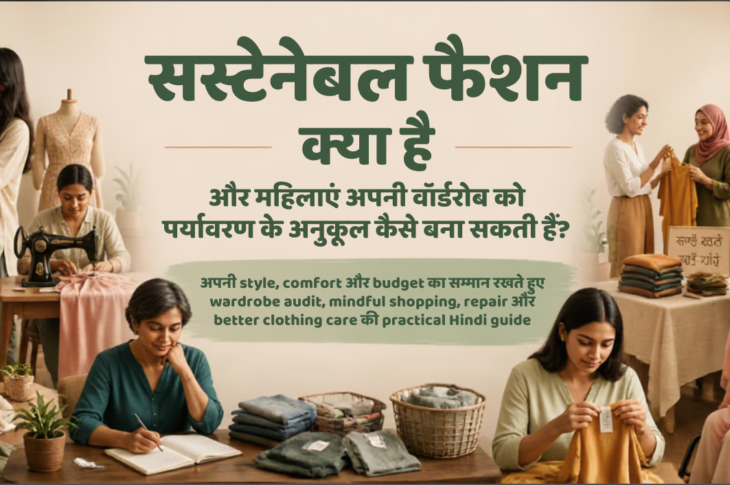
जब अलमारी भरी हो, फिर भी पहनने को कुछ न मिले
एक महिला अपनी वॉर्डरोब के सामने खड़ी है। कपड़े बहुत हैं, फिर भी समझ नहीं आ रहा कि आज क्या पहने। कुछ pieces शायद ही कभी पहने गए हैं, कुछ uncomfortable हैं, कुछ impulse purchases थे और कुछ सिर्फ किसी खास occasion के लिए खरीदे गए थे। तभी sale notifications आने लगती हैं। वह सोचती है—क्या sustainable wardrobe बनाने के लिए सब कुछ फेंककर महंगे natural-fabric कपड़े खरीदने पड़ेंगे?
जवाब है—नहीं। Sustainable fashion की शुरुआत नया खरीदने से नहीं, बल्कि जो पहले से आपके पास है उसे समझने, अधिक पहनने, बेहतर care करने, repair कराने, share करने और सोच–समझकर खरीदने से होती है। इसमें perfection, guilt या हर किसी के लिए एक जैसी beige capsule wardrobe की जरूरत नहीं।
|
याद रखने वाली बात: sustainable wardrobe आपकी वास्तविक जिंदगी के लिए होनी चाहिए—आपके body, budget, culture, work, climate, comfort, accessibility और personal style का सम्मान करते हुए। |
सस्टेनेबल फैशन क्या है और क्या नहीं है?
Sustainable fashion एक broad approach है, जो कपड़ों की पूरी journey पर ध्यान देती है—कौन उन्हें बनाता है, material क्या है, resource use और waste कितना है, garment कितनी बार पहना जाएगा, उसकी quality और durability कैसी है, उसे कैसे धोया और store किया जाएगा, repair या alter किया जा सकता है या नहीं और अंत में reuse, resale, donation या responsible disposal कैसे होगा।
इसका अर्थ केवल organic cotton, linen या recycled fabric खरीदना नहीं है। “Natural” automatically sustainable और “synthetic” automatically harmful नहीं होते। Climate, washing, drying time, durability, microfibre concerns, sourcing और actual use के आधार पर हर material के trade-offs हो सकते हैं। कोई single fibre हर स्थिति में universally सबसे sustainable नहीं है।
Ethical fashion और sustainable fashion overlapping लेकिन identical terms नहीं हैं। Ethical concerns में worker safety, fair treatment, wages, transparency और supply-chain practices शामिल हो सकते हैं। इसलिए केवल “eco-friendly”, “green” या “conscious” label देखकर blind trust न करें; specific information और brand transparency देखें।
किसी garment की sustainability fibre से आगे की बात है। अगर कोई कपड़ा आपके लिए comfortable है, सालों तक चलता है, बार–बार पहना जाता है और ठीक से care किया जाता है, तो उसका वास्तविक उपयोग decision में बहुत मायने रखता है।
अपनी wardrobe को समझना: पहले audit, फिर shopping
अपनी पूरी अलमारी एक साथ खाली करना जरूरी नहीं। Category-by-category audit करें—पहले tops, फिर bottoms, workwear, occasion wear या accessories। हर piece को चार groups में रखें: frequently worn, needs repair या alteration, rarely worn but meaningful, और ready to resell, swap, donate या recycle।
हर garment के लिए fit, comfort, confidence, condition, versatility, climate suitability, care effort और actual wear frequency देखें। “Fantasy self” के लिए खरीदे गए कपड़ों और वास्तविक जीवन में पहने जाने वाले कपड़ों का अंतर भी समझें। यह failure नहीं, बस useful information है। 30-day no-buy या shopping pause चाहें तो optional experiment की तरह आजमाएं, universal rule की तरह नहीं।
Shopping से पहले 5 सवाल
- क्या मेरे पास पहले से इसका similar piece है?
- क्या मैं इसे कम से कम तीन existing outfits के साथ पहन सकती हूं?
- क्या यह मेरे current body, lifestyle, climate, work और comfort needs के अनुकूल है?
- क्या quality, seams, closures, fabric feel और construction कीमत के अनुरूप लगते हैं?
- क्या मैं इसे wash, dry, store और repair realistically कर पाऊंगी?
Cost per wear को सरल भाषा में समझें
Cost per wear कोई exact financial formula नहीं, बल्कि decision aid है: purchase price को अनुमानित wears से समझें। महंगा garment automatically बेहतर नहीं और सस्ता garment automatically bad नहीं। Quality, frequency, comfort, care cost, durability और actual use को साथ देखें। कई बार किसी garment को अधिक पहनना, उसकी purchase price से जुड़े सवाल से भी अधिक useful sustainability behaviour होता है।
Fabric labels और garment quality पढ़ने की practical guide
खरीदने से पहले fibre content और care label पढ़ें। Weave या knit, opacity, stretch recovery, seams, lining, buttons, zips, pockets और finishing देखें। अपने climate और sensory needs के अनुसार breathability, drying time, wrinkle tendency, warmth, durability और fabric feel को महत्व दें।
|
Material |
व्यावहारिक बातें |
क्या देखें |
|
Cotton और linen |
अलग climates में उपयोगी हो सकते हैं; feel और drying time अलग हो सकते हैं। |
weave, opacity, shrinkage और care label |
|
Wool और silk |
तापमान और feel के लिए उपयोगी हो सकते हैं; care अधिक specific हो सकती है। |
lining, softness, cleaning और storage |
|
Viscose |
हल्का drape दे सकता है; wet condition और care instructions पर ध्यान दें। |
seams, transparency और wash method |
|
Polyester और nylon |
durability, quick drying या performance दे सकते हैं; washing और microfibre context देखें। |
fabric feel, construction और care |
|
Elastane और blends |
stretch और fit दे सकते हैं; blends repair या recycling को कठिन बना सकते हैं, लेकिन performance और durability भी दे सकते हैं। |
stretch recovery और fibre composition |
“Recycled”, “organic”, “natural”, “biodegradable” और “conscious” जैसे शब्द helpful clues हो सकते हैं, complete proof नहीं। Specific certification details, fibre percentage, durability, repair options और care information तलाशें। Context matters.
कम खरीदें नहीं, बेहतर सोचकर खरीदें
Intentional shopping का मतलब fashion joy छोड़ना नहीं है। इसका अर्थ है sale pressure से थोड़ा पीछे हटकर पूछना—क्या यह मेरे जीवन में जगह बनाएगा? 24-hour pause लें, पांच सवालों की जांच करें और देखें कि नया piece existing wardrobe के साथ सच में काम करता है या नहीं।
Second-hand, swap, rental और borrowing
Pre-loved clothing, thrift या resale platforms, clothing swaps, library-style sharing, rental और borrowing उपयोग बढ़ाने के practical रास्ते हो सकते हैं। खरीदने से पहले fit, hygiene, repair condition, return policy, rental cleaning, transport और convenience देखें।
Second-hand हर person या category के लिए accessible नहीं होता। Underwear, swimwear, footwear, uniforms, cultural garments और accessibility needs में personal comfort और hygiene priorities को महत्व दें। इसे moral requirement नहीं, उपलब्ध विकल्प की तरह देखें।
Repair, alteration और garment care
Loose button, छोटा tear, hem, zip, stain, lining या fit issue के लिए tailor, repair service या basic sewing सीखना मददगार हो सकता है। Alteration से garment को current body, pregnancy या postpartum changes, mobility, modesty, work और accessibility needs के अनुसार फिर उपयोगी बनाया जा सकता है। Upcycling में किसी कपड़े को tote, patchwork या घर के उपयोग की वस्तु में बदला जा सकता है, लेकिन तभी जब वह आपके लिए practical हो।
Washing frequency को garment, sweat, stain, climate और hygiene needs के अनुसार तय करें। Care label follow करें; हर कपड़े पर एक ही wash rule लागू न करें। जहां practical हो, appropriate या cool wash, full loads, gentle detergent और air drying अपनाएं। Personal hygiene, medical needs, allergies और बहुत गर्म या humid climate में cleanliness को प्राथमिकता दें।
Stains को जल्दी treat करें, knitwear को जरूरत के अनुसार fold करें, structured garments को suitable hangers पर रखें और seasonal pieces को साफ, सूखी जगह में store करें। इससे कपड़ों की life बढ़ सकती है, बिना rigid rules के।
अलग–अलग lives के लिए sustainable wardrobe
|
जरूरत |
व्यावहारिक approach |
|
Workwear |
Repeatable outfit formulas, washable basics, layering, comfortable footwear और repairable pieces चुनें। |
|
Occasion wear |
Borrow, rent, repeat styling, alteration, accessories और garment sharing पर विचार करें। |
|
Modest fashion |
Coverage, layering, breathable fabrics, cultural preferences और comfort को प्राथमिकता दें। |
|
Maternity और postpartum |
Adjustable fits, temporary wardrobe, borrowing, resale और emotional comfort को जगह दें। |
|
Disability और sensory needs |
Seated dressing, soft materials, magnetic या Velcro closures, easy-care fabrics, adaptive clothing और specialist makers उपयोगी हो सकते हैं—एक solution सबके लिए नहीं। |
|
Climate और budget |
Heat, humidity, cold, rain, dust, laundry access और emergency clothing needs के अनुसार निर्णय लें; repair और tailoring को replacement से पहले देखें। |
Budget-friendly sustainable wardrobe कैसे बनाएं?
सस्टेनेबल wardrobe महंगे labels की shopping list नहीं है।
पहले repair, styling, swap और tailoring देखें।
एक versatile layer, comfortable bottom या reliable workwear piece जैसी वास्तविक जरूरतों को प्राथमिकता दें।
Budget कम हो तो धीरे–धीरे खरीदें, cost per wear सोचें और care cost भी जोड़ें।
Essential या emergency clothing खरीदने पर guilt महसूस करने की जरूरत नहीं।
Declutter करते समय जिम्मेदारी
“Donation” automatic solution नहीं है।
केवल साफ और usable items उन्हीं organisations को दें जो उन्हें स्वीकार करती हों; उनकी current needs और policies पूछें।
Resell, swap, gift, repair, repurpose, textile recycling या responsible disposal के विकल्प देखें।
Damaged, stained या unusable कपड़ों को donation bins में डालना हमेशा सही नहीं; local textile collection rules check करें।
Decluttering का लक्ष्य guilt-free clarity है, waste तेजी से बढ़ाना नहीं। कोई meaningful garment अभी rarely worn है तो उसे अलग रखें; हर चीज को तुरंत हटाना जरूरी नहीं।
Greenwashing और vague claims को कैसे पहचानें?
Specific material, process, certification, measurable detail या supply-chain information के बिना लिखे “eco”, “green” और “conscious” जैसे शब्दों से सावधान रहें।
Brand की fibre composition, durability, repair policy, transparency, certification details और care information देखें।
एक “green” product खरीदना पूरी supply chain का प्रमाण नहीं।
Consumer को investigator बनने का पूरा burden भी नहीं उठाना चाहिए।
Information अधूरी हो तो modest claims, practical use और अपनी जरूरत के आधार पर फैसला करें।
Common mistakes और बेहतर alternatives
- पूरी wardrobe एक साथ replace करना — existing pieces को अधिक पहनें और धीरे सुधारें।
- केवल fabric name देखकर खरीदना — quality, wear frequency, care और context साथ देखें।
- Beige capsule को universal solution मानना — अपनी style, culture, climate और work needs के अनुसार wardrobe बनाएं।
- Sale को saving समझना — 24-hour pause और five-question check अपनाएं।
- Uncomfortable clothes को guilt से रखना — repair, alter, resell, swap या responsibly pass on करें।
- Donation को disposal समझना — recipient needs और textile rules check करें।
- Expensive label को automatically ethical मानना — specific information और transparency देखें।
- Laundry advice को rigid बनाना — care label, hygiene, health और climate balance करें।
Do और Don’t guidance
|
Don’t हर existing garment को unsustainable मानकर फेंकें। Guilt के कारण fashion joy छोड़ें। Natural या recycled शब्द को complete proof मानें। हर व्यक्ति को second-hand या capsule wardrobe अपनाने को कहें। Unusable clothes blindly donate करें। |
Do कपड़ों को अधिक पहनें, repair करें और care दें। Style, identity, culture और sustainability को साथ रखें। Details और context देखें। Accessible options दें और personal needs का सम्मान करें। Resell, repair, recycle या local rules follow करें। |
Wardrobe sustainability केवल consumer responsibility नहीं है। Brand transparency, worker wellbeing और systemic change भी जरूरी हैं। हर समस्या का भार किसी एक महिला की shopping choices पर नहीं होना चाहिए।
7-day sustainable wardrobe reset
इसे guilt-free learning experiment समझें, strict challenge नहीं। हर दिन छोटा कदम काफी है।
- Day 1: एक category का audit करें और frequently worn, repair, resell या swap और rarely worn groups बनाएं।
- Day 2: एक garment repair, alter या clean-care task पूरा करें।
- Day 3: तीन existing pieces से एक नया outfit combination बनाएं और photograph या note करें।
- Day 4: एक garment का fibre label, care label और construction ध्यान से पढ़ें।
- Day 5: अगले clothing purchase पर 24-hour pause और five-question check अपनाएं।
- Day 6: एक swap, resale, rental, borrowing या local repair option की जानकारी लें।
- Day 7: review करें कि कौन–सी दो habits आपकी style, budget और real life में टिक सकती हैं।
आज से शुरू करने के 5 छोटे कदम
- अपनी wardrobe की केवल एक category चुनकर audit करें।
- एक loose button, hem, stain या fit issue को repair या alter करें।
- अगले purchase से पहले 24-hour pause लें।
- तीन existing garments से एक नया outfit बनाएं।
- एक donation, resale, swap, rental या textile recycling policy verify करें।
Mini checklist
|
• क्या मैं पहले से मौजूद कपड़ों को पर्याप्त पहन रही हूं? •क्या garment मेरे current fit, comfort, climate, body और lifestyle के अनुकूल है? • क्या मैं इसे कम से कम तीन तरीकों से style कर सकती हूं? •क्या मैंने fibre और care labels पढ़े हैं? •क्या quality, seams, closures और durability price के अनुरूप हैं? •क्या मैं इसे realistically wash, dry, store और repair कर सकती हूं? • क्या sale मुझे जरूरत से ज्यादा खरीदने के लिए push कर रही है? •क्या second-hand, swap, rental, borrowing या alteration accessible विकल्प हैं? •क्या मैं unusable clothing को blind donation के बजाय सही channel में भेज रही हूं? •क्या मेरी wardrobe sustainability मेरी culture, disability, budget, work और personal style का सम्मान करती है? • अगले सप्ताह कौन–सी दो small habits जारी रखूंगी? |
एक reassuring शुरुआत
Sustainable fashion perfect wardrobe, zero waste या हर खरीद पर flawless decision का नाम नहीं है। यह अपने कपड़ों के साथ अधिक awareness, care, creativity और responsibility का रिश्ता बनाने की प्रक्रिया है। एक garment को बार–बार पहनना, सही care देना, repair कराना, outfit repeat करना, swap करना, second-hand चुनना या unnecessary purchase रोकना—हर छोटा कदम मायने रख सकता है।
महिलाओं को style, comfort, culture, confidence, accessibility और joy के बीच चुनाव करने की जरूरत नहीं। Sustainable wardrobe वही है जो आपकी वास्तविक जिंदगी में टिके, आपके budget और body का सम्मान करे और आपको guilt नहीं, clarity दे। शुरुआत अपनी अलमारी में मौजूद एक garment से करें, पूरी दुनिया बदलने की कोशिश से नहीं।
