

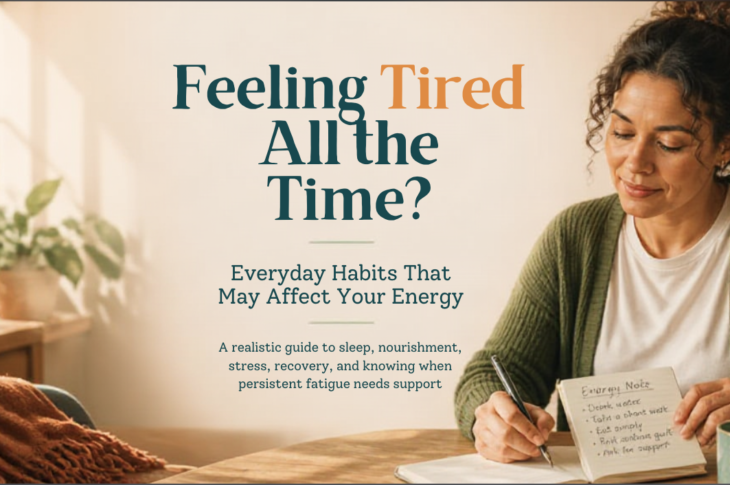
Waking up tired can make the whole day feel uphill. You may press snooze several times, depend on caffeine to feel functional, and move through work or study with a foggy mind. Meals and breaks get postponed, ordinary tasks feel unusually demanding, and by evening you may have no energy left for plans, conversation, or basic care.
You might even wonder whether you are lazy, out of shape, or simply not trying hard enough. But fatigue can look different from person to person. Someone may appear productive while feeling emotionally flat, irritable, overwhelmed, or close to their limit. Appearance alone cannot reveal how someone feels.
Energy can be influenced by sleep quality, stress, workload, nutrition, hydration, movement, screen habits, pain, mood, medication, hormonal or life-stage changes, infections, and health conditions. One article cannot identify the cause. Persistent or unusual fatigue should not be dismissed as a character flaw.
The goal is not constant productivity or an instant energy boost. It is to notice patterns, make realistic changes, protect recovery, and seek qualified support when tiredness is persistent, worsening, unusual, or affecting daily life.
|
Remember: Everyday habits can support energy, but tiredness is not always a lifestyle problem. “Pushing harder” is not a universal solution, and rest does not need to be earned by reaching collapse. |
Feeling tired is information, not a moral verdict
Tiredness may be a response to insufficient recovery, stress, illness, pain, emotional load, medication effects, or a demanding environment. Productivity and energy are not the same thing: a person can meet responsibilities while using every available reserve.
Resting, pacing, or needing accommodations does not automatically mean someone is lazy. You can be responsible, ambitious, and capable while still having limited energy. A more useful first response is curiosity: What has changed? What is demanding more of me? What support is missing?
Shame often adds another layer of strain. Proportion is more helpful than blame. A difficult week may call for recovery and practical help; a pattern lasting weeks may call for a conversation with a health professional.
Everyday habits that may affect energy
Habits can overlap, and changing one does not prove it was the cause. Possible influences include:
- Sleep disruption — irregular sleep, inconsistent wake times, late-night work, caregiving, scrolling, gaming, or difficult conversations.
- Activation before bed — bright screens, notifications, or unfinished work that keep the mind alert.
- Food and fluids — skipping meals, eating too little, limited access to nourishing food, dehydration, or changing needs linked with weather, activity, illness, pregnancy, or breastfeeding.
- Caffeine patterns — high intake, late-day caffeine, or using caffeine to compensate for ongoing exhaustion.
- Demand and recovery — long periods of sitting, intense exercise without recovery, overcommitting, constant availability, or too few boundaries.
- Emotional load — chronic stress, grief, anxiety, low mood, loneliness, financial worries, or decision fatigue.
- Environment and access — pain, allergies, disrupted breathing, shift work, commuting, caregiving, disability, chronic illness, or unsafe living conditions.
Sleep quality and recovery, not just time in bed
The number of hours available for sleep matters, but so does sleep quality and the chance to recover. A realistic sleep window may be more useful than an ideal schedule that does not fit your work, family, health, or housing situation.
Where practical, try a calmer wind-down, reduce work or notification demands before sleep, and make the room as comfortable and safe as your circumstances allow. Parents, caregivers, shift workers, people with insomnia or chronic pain, people sharing rooms, and people with disabilities may need different strategies. A short rest, a quieter transition, or protected time without demands may still count as recovery.
Do not treat a perfect bedtime routine as a test of character or a guaranteed cure. If you snore loudly, wake gasping, have persistent insomnia, experience restless sleep, or remain exhausted despite adequate opportunity to sleep, consider seeking medical advice.
Skipping meals, restrictive eating, hydration, and caffeine patterns
Regular, accessible nourishment can be easier to sustain than extreme rules. Depending on your needs, culture, budget, and access, practical combinations might include grains with protein, legumes, vegetables, fruit, dairy or alternatives, and snacks that help you get through a demanding day. This is not a prescription or a meal plan. Eating too little can be relevant information, especially if restriction is intentional or difficult to control.
Fluid needs vary. Body cues, climate, activity, illness, pregnancy, and breastfeeding can all matter. Notice whether you have practical access to drinks during the day, rather than forcing yourself toward one universal target.
Caffeine can feel useful, but for some people it may worsen sleep or anxiety. Instead of following a rigid rule, notice the timing, amount, and effect. Do not use supplements as a default solution; discuss them with a qualified clinician if a possible need arises.
|
Do: make nourishment and fluids easier to access, keep a simple snack available if helpful, and observe patterns. Don’t: moralise food, punish yourself for needing convenience, or assume one food, drink, vitamin, or detox works for everyone. |
Movement and the cost of sitting or overexertion
Gentle movement, stretching, walking, changing position, or accessible activity may help some people feel more alert or reduce stiffness. Others may need pacing, rest, physiotherapy, medical guidance, mobility aids, or energy conservation instead.
Movement should not be punishment, and tired people do not always benefit from pushing through. Overexertion and delayed recovery can also leave you depleted. A supportive question is: What amount of movement or rest helps me function today without creating a larger cost tomorrow?
Stress, mental load, emotional exhaustion, and screen overload
Planning, emotional labour, work pressure, caregiving, conflict, grief, financial worries, and constant notifications can consume energy even when your body is not physically active. Try batching messages, using do-not-disturb with emergency exceptions, writing a brain-dump list, or creating a short transition between tasks.
Reduce unnecessary decisions where possible and ask for specific help, such as “Can you handle dinner on Thursday?” rather than “Can you help more?” Rest is not always screen-free: audio, a familiar show, online support, or quiet connection may be restorative. Notice whether an activity settles you or leaves you more activated.
Pain, illness, medication, life stages, and accessibility
Energy can change during pregnancy, postpartum recovery, menstruation, perimenopause, or menopause. Chronic pain, disability, infections, allergies, anaemia, thyroid disorders, sleep disorders, depression, anxiety, medication effects, and other health conditions may also influence how a person feels. These examples are not a diagnosis.
You may need accommodations, pacing, mobility aids, task sharing, flexible hours, rest breaks, or professional support. Never stop or change prescribed medication without speaking with the prescriber. Your circumstances, not an imagined ideal routine, should shape any plan.
How to track patterns without becoming obsessive
For three to five days, make a brief note rather than a detailed surveillance project. Include sleep opportunity and quality, meals, fluids, caffeine timing, movement, stress, pain or other symptoms, medications as prescribed, energy at different times, and what seemed to help or worsen it.
Keep the notes kind and practical. The purpose is to spot useful patterns, not prove that you caused your fatigue. Stop if tracking increases anxiety or self-blame. If needed, bring relevant notes to a qualified clinician.
A realistic morning, workday, and evening routine
|
Part of day |
Supportive option |
Low-energy version |
|
Morning |
Notice energy before judging it. Drink something if appropriate, eat or plan accessible nourishment, choose one essential priority and one optional task. |
Focus on safety, basic care, simple food or fluids, and asking for help. Caffeine does not have to be the only plan. |
|
Work or study day |
Take short transitions, change position or use accessible movement, eat away from the screen when possible, batch notifications, and ask which priorities matter most. |
Do the essential task in the smallest workable step. Postpone non-essential work or request an adjustment. |
|
Evening |
Write down unfinished tasks, lower stimulation where practical, prepare only what will genuinely help tomorrow, take prescribed medicines as directed, and protect a sleep opportunity. |
Choose simple food, hydration, necessary care, support, and rest. “Good enough” preparation is enough. |
What to change first when energy is low
- Choose one recovery habit, not ten. A small change is easier to repeat.
- Make it fit your life. Adapt it to health, access, work, money, family, culture, and responsibilities.
- Observe without judgement. Notice what changes, without claiming certainty.
- Keep what helps. Drop what adds pressure and seek support for what does not improve.
Energy support is not a challenge or a test of willpower. The right adjustment may be rest, delegation, nourishment, a boundary, medical advice, or simply fewer demands for a while.
When persistent tiredness needs medical attention
Consider qualified medical advice if tiredness lasts for several weeks, keeps returning, is getting worse, or interferes with work, study, caregiving, movement, relationships, or basic daily activities. Seek advice for fatigue with unexplained weight change, persistent fever, unusual bleeding, ongoing pain, dizziness, fainting, shortness of breath, palpitations, marked paleness, new weakness or numbness, confusion, major sleep changes, severe mood changes, or other concerning symptoms.
Seek urgent local medical or emergency support for chest pain, severe breathing difficulty, fainting, sudden neurological symptoms, severe allergic reaction, or immediate danger. If self-harm, suicide, or immediate danger is involved, contact local emergency services or an appropriate local crisis resource. This article offers general education, not diagnosis or treatment.
A 7-day “support your energy” reset
Treat this as a flexible experiment, not a guaranteed cure, productivity challenge, or replacement for professional care.
- Day 1: Note your energy pattern and current demands without judgement.
- Day 2: Protect one realistic recovery window.
- Day 3: Add one accessible nourishment or hydration support.
- Day 4: Set one screen or notification boundary.
- Day 5: Choose gentle movement, position changes, pacing, or deliberate rest according to your body.
- Day 6: Ask for one specific practical adjustment or task-sharing arrangement.
- Day 7: Review what helped, what drained you, and what needs medical or social support.
Five small actions to start this week
- Write down one energy drain and one energy support.
- Choose one meal, snack, or hydration habit that is realistic for your day.
- Set one notification or availability boundary.
- Plan one recovery window and one low-energy version of an essential task.
- If fatigue is persistent, unusual, or affecting daily life, consider booking qualified medical advice.
Mini checklist
- Am I tired because of a recent change, or has this been continuing?
- Am I getting a realistic opportunity for sleep and recovery?
- Have I been skipping meals, restricting food, or relying heavily on caffeine?
- Are stress, grief, caregiving, pain, screens, or constant availability using up my energy?
- Is my movement plan supportive, accessible, and proportionate?
- What accommodation, delegation, pacing, or help would make today more manageable?
- Have I noticed symptoms that deserve professional attention?
- Am I treating fatigue as information rather than a character flaw?
- What is one small change I can repeat without punishing myself?
