

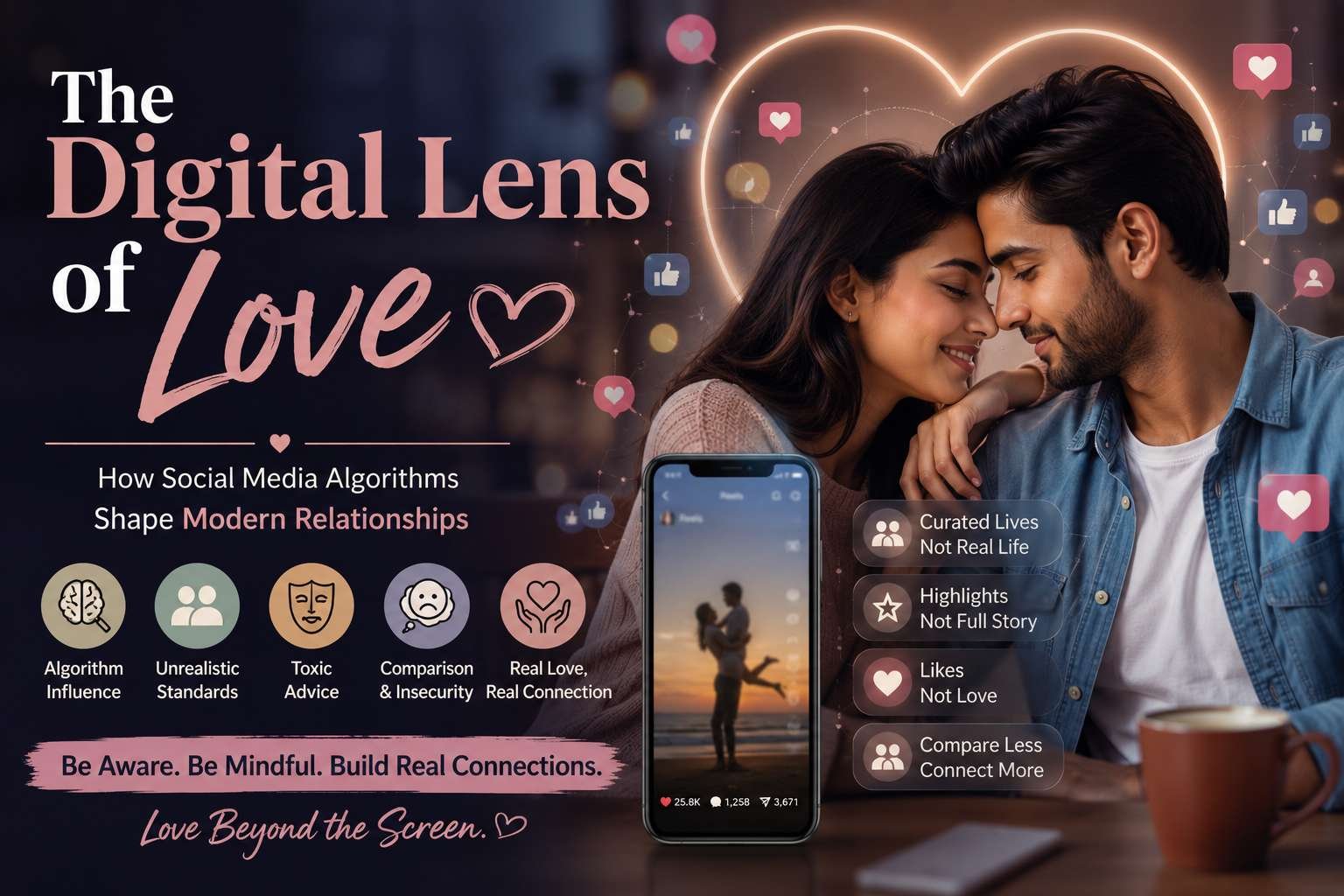
The Digital Lens of Love
Modern relationships are no longer shaped only by real-life experiences. Social media platforms — from Instagram to TikTok — now play a major role in how people perceive love, attraction, and connection. Behind every post and video lies an algorithm that decides what appears on the screen. These algorithms are designed to keep users engaged, but in doing so, they also influence how people think about relationships.
The Algorithm’s Role in Shaping Attraction
Social media algorithms prioritize content that gets attention — likes, comments, and shares. This often means showing more of what people find visually appealing. As a result, users are constantly exposed to images of conventionally attractive people, filtered selfies, and idealized lifestyles.
Over time, this can subtly shift perceptions of beauty and desirability. People may start comparing their partners or themselves to these online standards, leading to dissatisfaction or insecurity in real relationships.
The Rise of “Couple Content”
Platforms are filled with videos of couples sharing romantic gestures, travel vlogs, and “relationship goals.” While such content can be heartwarming, it often presents a filtered version of reality. Algorithms amplify these posts because they evoke strong emotional reactions — admiration, envy, or longing.
The constant exposure to perfect-looking relationships can create pressure to replicate them. Real relationships, which include disagreements, compromises, and imperfections, may start to feel inadequate in comparison.
Toxic Relationship Advice and Viral Trends
Another growing trend is the spread of relationship advice — not all of it healthy. Algorithms push content that sparks engagement, even if it’s controversial or misleading. This means toxic advice, manipulative dating tactics, or gender-stereotyped content often goes viral.
For example, videos promoting “tests” for loyalty or suggesting emotional games can normalize unhealthy behaviors. When such advice becomes mainstream, it can distort how people communicate and trust each other.
Unrealistic Love Standards
Social media often portrays love as constant excitement — grand gestures, luxury gifts, and picture-perfect moments. But real love is built on everyday care, patience, and understanding. Algorithms, however, reward content that looks dramatic or glamorous, not ordinary.
This creates unrealistic expectations. People may begin to believe that love should always feel thrilling or that conflict means failure. Over time, this can lead to dissatisfaction, emotional burnout, or even avoidance of genuine intimacy.
The Emotional Impact of Comparison
Constant exposure to idealized relationships can trigger comparison and self-doubt. Studies show that people who spend more time on social media often report lower relationship satisfaction. The reason is simple — when everyone else’s love life looks perfect online, it’s easy to feel like something is missing in one’s own.
This comparison culture can also affect single individuals, making them feel pressured to find love quickly or to meet certain standards before being “relationship-ready.”
How to Build Healthier Digital Habits
1. Be Aware of Algorithmic Influence
Recognize that what appears on the feed is not random — it’s curated to keep attention. Awareness helps reduce emotional impact.
2. Follow Realistic and Positive Voices
Engage with creators who promote healthy communication, emotional intelligence, and realistic relationship advice.
3. Limit Comparison
Remember that social media shows highlights, not the full story. Every relationship has ups and downs that rarely make it online.
4. Communicate Offline
Spend quality time with partners without digital distractions. Real conversations build stronger emotional bonds than likes or comments ever can.
5. Curate the Feed
Unfollow accounts that trigger insecurity or unrealistic expectations. Replace them with content that inspires authenticity and self-growth.
The Balance Between Digital and Real Love
Social media can be a tool for connection, inspiration, and learning — but only when used mindfully. Algorithms are not inherently harmful; they simply reflect what people engage with most. The key lies in conscious consumption.
Modern relationships thrive when partners understand that love is not a performance but a shared experience. By separating online illusions from real emotions, couples can build deeper, more authentic connections.
